
Carta Caritatis"- the Cistercian Constitution, Blueprint of the Templar Rule
Religious fanaticism in the 12th Century Muslim camp
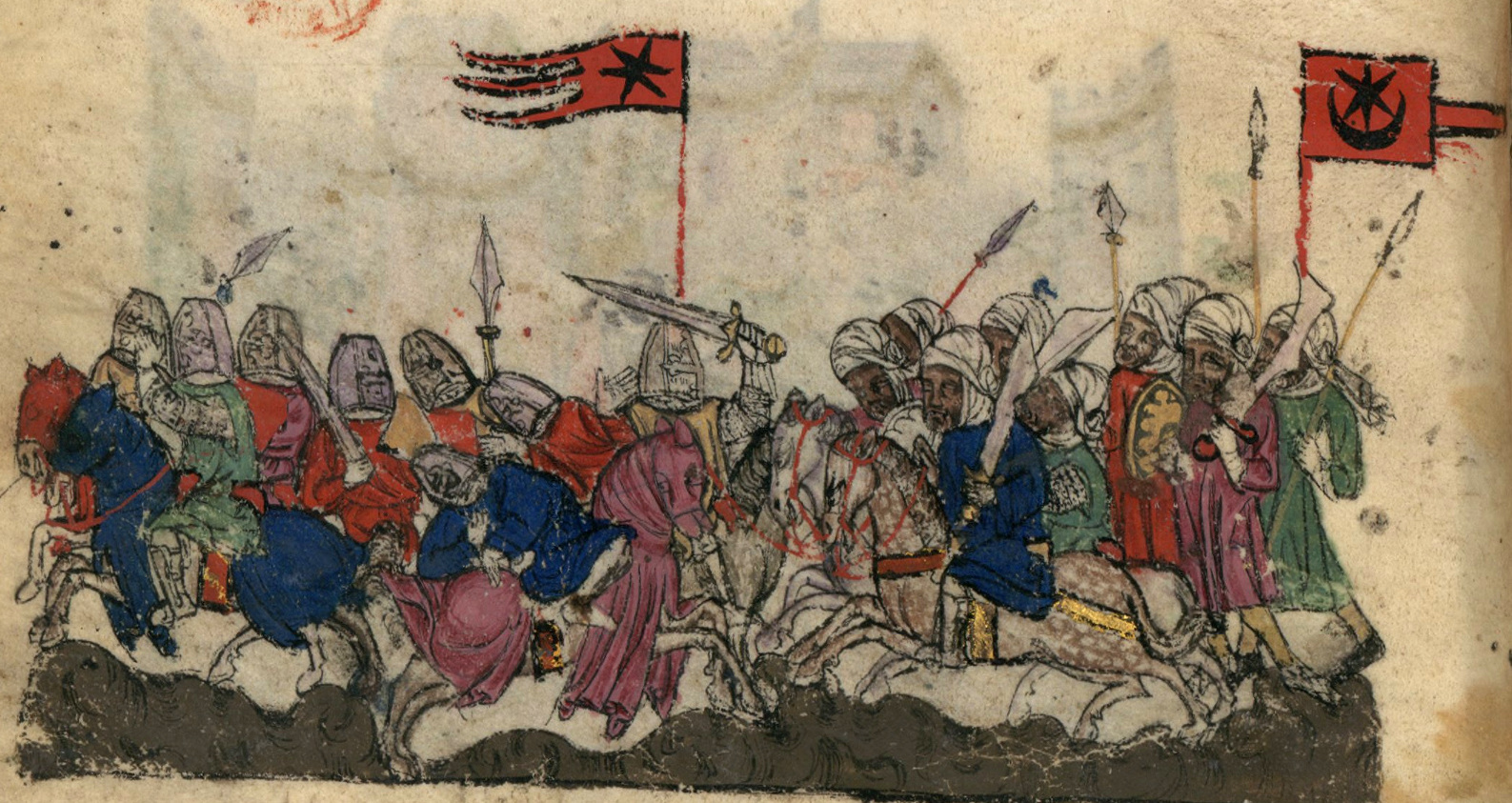
Religious fanaticism in the 12th Century Knights Templar camp

"The Templars style themselves “The Avengers of Jesus Christ,” and the “instruments and ministers of God for the punishment of infidels,” and the Pope and the holy fathers of the church proclaim that it is specially entrusted to them “to blot out from the earth all unbelievers,” and they hold out the joys of paradise as the glorious reward for the dangers and difficulties of the task.
Origin of the Cistercian Order: isolation and poverty
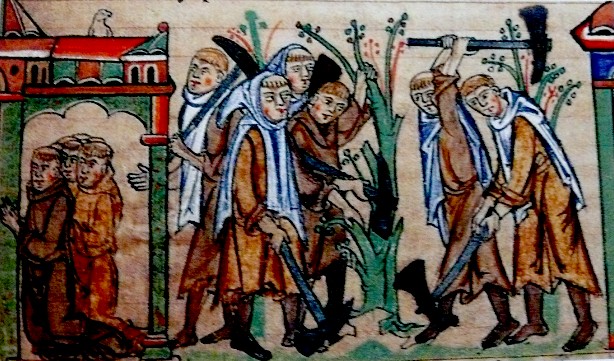
"The self-induced exclusion from the world discussed in the ‘Exordium Parvum’ is perhaps the first instance we see of the ideal of poverty, which became a part of the (Cistercian) Order’s mantra.
Knights Templar and Papal bulls: Milites Templi (1144)
.png)
The exemplary military conduct of the Knights Templar documented

"Brother Everard des Barres, the newly-elected Master of the Temple, having collected together all the brethren from the western provinces, in 1147 joined the standard of Louis, the French king, and accompanied the crusaders to Palestine.
The Templar Rule and the Cistercian influence
  |
The early Cistercians: back to strict observance of the Rule of St Benedict

"The ‘Exordium Parvum’ is a 12th century Cistercian document that includes the early history of Cîteaux, incorporating official letters and documents with narrative. While this source illustrates to us that the monks left Molesme to pursue a more rigorous devotion to the Rule of St Benedict, yet there is contrary evidence within the ‘Exordium Cistercii’ that tells us that the monks left for a new way of life because Molesme placed too much emphasis on materialistic wealth and possessions.
Gregorian reform at the root of Cistercian monasticism
"The Gregorian Reforms (initiated by Pope Gregory VII and the circle he formed in the papal curia, c. 1050–80, dealt with the moral integrity and independence of the clergy, TN). This reform inspired others to seek a monastic life far from the secular world and all its excesses and greed, to a life based around control of desire, and the strict discipline of the rules of the desert fathers.
Many new orders were formed, namely Benedictine and Augustinian. Of these new orders, it was the Cluniacs that dominated in the monastic aspect of the Church (which in the medieval period was much more significant). The Cluniacs sought to follow the Rule of St Benedict, taking vows of obedience and poverty. The importance of the Cluniacs in this innovative period cannot be understated; ‘At the end of the eleventh century, at the height of its magnificence, Cluny was the head of a huge monastic empire containing many hundreds of dependencies and associated houses spread throughout western Europe....
The Cistercian Order finds its origins in the Cluniac monastery. It was from the abbey of Molesme, that Robert of Molesme with other monks, including Stephen Harding, left in search of a monastic life of stricter poverty than had been seen hitherto by the Cluniacs....The Cistercian, though he lived a communal life, had his salvation very much in his own hands than his Cluniac cousin: he was expected to do more to eradicate his own sins than to pray for the forgiveness of others. This illustrates some other differences between the two reformist orders.
The early Cistercians sought an isolated place, rejecting the world, to pursue this vocation.... The history of the Cistercian Order is integral to the history of western monasticism....Indeed, the history of the Cistercian Order is so intertwined with the history of medieval Europe as a whole, that it is hard to identify which influenced the other more."
This blog quotes freely from the thesis by Lori Firth, Hull University (2012): "A Comparison of the Cistercian and Knights Templar Orders, And the Personal Influence of Bernard of Clairvaux", to be found here. References in this source. Illustration shows Pope Gregory VII source
Support TemplarsNow™ by becoming a Patron, tipping us or buying one of our Reliable Books
Knights Templar and Papal bulls: Omne datum optimum (1139)

The origin of the Cistercian Order by its own account: Exordium Parvum

The Order of the Holy Sepulchre of Jerusalem - contemporary to the Knights Templar
