The Ciphers of the Cistercians
The Origin of the Templars according to Walter Map ca 1190
Walter Map (Latin: Gualterius Mappus; French: Gautier Map; 1140 – c. 1210) was an English medieval courtier and writer. Map claimed that he was a man of the Welsh Marches. He was probably born in Herefordshire. Map was a courtier of King Henry II of England, working as clerck in the royal household, and as itinerant justice and justice in Eyre. The King also sent him on missions to Louis VII of France and to Pope Alexander III. Map's studies and employment took him to several church services: canon and precentor of Lincoln, parson of Westbury-upon- Severn in Gloucestershire, prebendary of Mapesbury in the Willesden neighbourhood of London, and in later life (1197) Archdeacon of Oxford.
The Cistercian Order: incorporated instead of founded
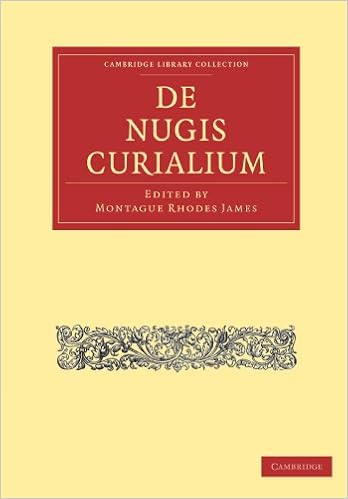
Unlike what is generally thought, there was no Cistercian Order as a united entity for much of the twelfth Century. (...) Such a Cistercian Order was only invented in the third quarter of the twelfth century. That Order as we usually think of it, an administrative institution that united more than five hundred abbeys by 1215 (when its organization was held up by the Fourth Lateran Council as a model to be emulated), did not appear in 1119 or 1113 or 1098, the dates usually asserted, but much later.
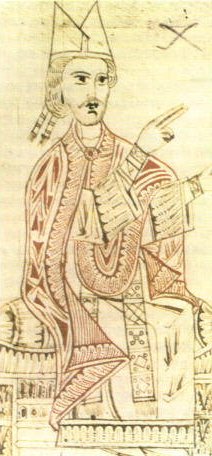
The 1074 call for Crusade by Pope Gregory VII
The 1095 speech by Pope Urban II delivered at Clermont Ferrand is well known. This speech aimed at arrousing the people to start a armed pilgrimage to deliver the Holy Land from the hands of the "pagans", that later became known as the First Crusade. Less well known is the speech with a similar purpose delivered in 1074, so about 20 years earlier, by Pope Gregory VII. In this speech the Pope suggested a military expedition to assist the Byzantine empire against the Seljuk Turks, following the defeat of the Byzantine army under Emperor Romanos IV Diogene by the Seljuk Turks at Manzikert in 1071. The very first call to crusade?
Pope Urban II call to crusade at Clermont, November 27, 1095
An earlier founding date of the Templar Order reconstructed
The Templar cavalry charge
An animated history of the conquest of Jerusalem 1099
source YouTube
Support TemplarsNow™ by becoming a Patron, tipping us or buying one of our Reliable Books
Templar trials retold in a convincing historical novel
However accurate and descriptive these monumental scientific studies are, they focus mainly on the scientific facts, as they should. They are not intended to elaborate on how the people of the day, the Templars concerned in the first place, experienced, felt about and dealt with what happened. For this, historical fiction may come to the rescue, as far as it is sufficiently researched and based on historical data. A good example of such a novel is Non Nobis by Hanny Alders.
The Templar Rule: its multiple origin and long development
The Primitive Rule of the Temple originated as result of the Troyes Council of January, 1129. During that council Hughes de Payens, the major founding member of the group of knights that from about 1119 lived in the former Al-Aqsa mosque on Table Montain, related an account of this group's foundation and history. What is known on the origin of the Rule and its development?
Martyrologies and legendaries: local roots of Medieval Templar communities
Among the books discovered in Templar churches (during the investigations following the Templar arrests of October 13, 1307; TN) were many psalters, legendaries, martyrologies, and antiphonals, but also books for different offices (officiaria) and breviaries. What is their importance?
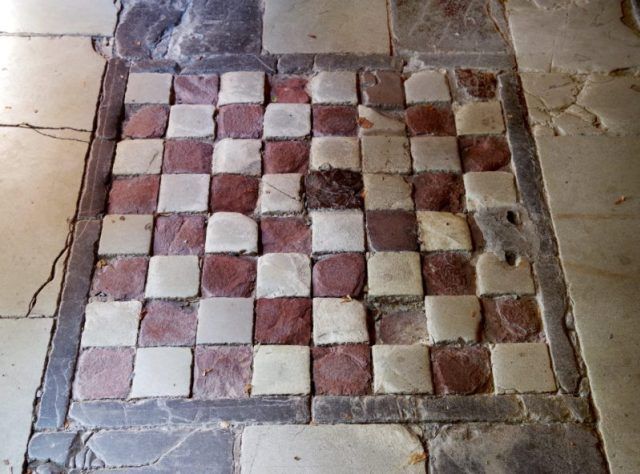
The Templar Rule and the prohibition of chess, or was it dice?...
Chess is a game of Arabic origin, that was well known and appreciated at all medieval courts, Muslim and Christian, in Al Andaluz and beyond. The prohibition of Templars playing chess attributed to Bernard of Clairvaux is not to be found in one of the 76 Primitive Rules designed on the results of the Troyes Council (January 1129). So what are the facts?
The masonic Templar link - myths and facts
Templar history has always been accompanied by myths, including with respect to a masonic link. How to distinguish myths from facts?
Knights Templar: council to Kings
Templar territorial organisation in the West
Templar chapel architecture in France
Chapels are today the most iconic remains of Templar buildings in France. Sometimes alone in their village or in the open countryside, they have long attracted the attention of art historians. The myth of the primacy of round churches which has only been documented for the Temple in Paris, Laon and perhaps Metz in France, has now been disproved. What was the common design of Templar chapels?
More Templar sites in the Allier department, Central France.
![]() | ||
| Beauchassin Templar house, Saint Hilaire, Allier source Google Maps |
Project Beauceant (www.templiers.org) is an extensive website (in French), with the main objective to set up a kind of encyclopedia on the Templar Order and a catalogue of diverse historical remnants that the presence of these men has left everywhere in Europe and the Middle-East. To do it, the Project is open to any person, professional or not, who wants to share his research and experiences on this topic. It also contains much information on Templar commanderies. Regretfully many commanderies in the Centre of France seem to be missing. For these additional sources have to be considered, such as the ones below.
Templiers.net is another great website (in French) with a lot of information on the Knights Templar and the crusades. It includes very detailed descriptions of the French commanderies, in alphabetical order and per Département.
Mainly from this latter source TemplarsNow composed a new map containing all known and probable Templar sites in the Allier department according to templiers.net. To this were added sites mentioned on templarii3m.free.fr. All sites were checked on other maps and aerial photographs and categorized, and indicated on the best possible geographical location.
The resulting map is shown below and can also be reached by this link. The work on the map continues, adding information from other sources. TemplarsNow acknowledges gratefully that this map could not have been made without the data from templiers.net.
Similar maps for (for now) 20 other French Departements can be found here.
New Templar site maps of Cher and Indre Departments, France
The aim of this project is to present earlier published information on commanderies on modern Google Maps as much as possible at the exact location. Sources are mainly the websites templiers.net and templiers.org, supplemented with information from Wikipedia and other sources on the web.
The location of all sites was checked using the Cassini maps as well as by scanning aerial photographs and maps for appropriate buildings, ruins or even toponyms. At this moment 19 departments have been processed in that way. More to follow.
TemplarsNow has earlier done a similar job for The Netherlands, Belgium and Luxembourg.
Early Templars, mainly from the ranks of lower and middlinge nobility
The Templar motte at Richemont, Allier, France
Saint Bernard - hating and loving Knights
The Cistercian Order, and especially Clairvaux abbot Bernard (1091-1153), was essential in creating the Templar Order. His attitude towards knights was as dogmatic as his character, as is documented in his Vitae, the book that describes his life. What does the Vitae tell us about his views towards knights, his convictions and way of life?
Noble support of the early Templars: funds, hands and land
The langue d’oïl, the mother tongue of the Knights Templar
Small rural commanderies: the heart of the Templar organisation
Were Occitanian Templars also Cathar heretics?
Templars and Cathars were contemporaries. The Cathars were subdued during the Albigensian Crusade (1209–1229). This was a 20-year military campaign initiated by Pope Innocent III to eliminate heretical Catharism in the Languedoc region, in southern France. What was the role of the Templars?
Templar devotion of Saint Blaise
Contemporary Templar images on a medieval shrine?
The Templar banner
The word, however, is more commonly used for the war flag (vexillum belli) used by the Knights Templar in the 12th and 13th centuries.
The Hildegarde - Bernard of Clairvaux link
Medieval Templar libraries - product of necessity and circumstances
"The lists of books recorded in Templar inventories show that although many Templar communities possessed only very few books, some had amassed quite substantial libraries. (...) None of these book collections were exceptional and if compared with those of established monastic houses even the largest of them seem insignificant. But were they?
Medical care in the Templar Order
Jacques de Molay: the last Templar Grand Master and Mongol warlord?
The sudden arrest of the Templars (in 1307, TN), the conflicting stories about confessions, and the dramatic deaths by burning, generated many stories and legends about both the Order and its last Grand Master. One suggested that De Molay wanted to join forces with the Mongols. True or false?
Secular Templar privileges, powers and immunities in the 12th century
Medieval Templar devotion - a strong focus towards Mary
Medieval Templar liturgy: standardized or patchwork?
The medieval Paris Temple reconstructed
A meticulous reconstruction of the Temple enclosure as it was at the end of the Middle Ages.
source: Youtube by Grez Productions
Relics of the Knights Templar en route - provenance and destination
It should be no surprise then that the military orders could amass substantial relic collections and so create highly visible cults. (...) In 1308 the Templar preceptory of Saint Eulalia (Aveyron, France) possessed no fewer than nine reliquaries containing a “wealth of relics,” (...)
Relics of the Knights Templar - character and objective
"Singled out by Jacques de Molay as a significant component of his order’s religious heritage, the last grand master of the Templars claimed that he did not know of “any other Order in which the chapels and churches had better or more beautiful ornaments and reliquaries relating to the divine cult and in which the divine service was better performed by its priests and clerics, except for cathedral churches.” (...)
The Templar church at Chamberaud, Creuse, France
Perhaps founded in 1193, the Templar commandery of Chamberaud (Creuse, France) stood on the natural promontory of the present bourg (village center). The oldest proven date relating to the existence of the House of the Temple of Chamberaud dates back to around 1258. The annexes of Chamberaud at the time of the Templars were Fransèches, La Pouge, Lépinas and Montbut.Spiritual and physical war in the Middle Ages
OSMTH Easter Message 2020
Easter Message from the Grand Master and Grand Commander.
Brothers and Sisters,
As we near the end of Lent, and approach Easter Sunday, our World continues to struggle with the COVID- 19 pandemic. And we face other challenges, to name a few: inequality and bias, lack of water in many nations, continued wars with increased refugees and natural disasters. But, amidst this strife, we have hope and faith in our Lord Jesus Christ for a better life, and with our prayers through this to God the Father, we will be delivered from this strife. Isn’t it great though, that even in these most difficult of times, we have so much to be thankful for, again as blessing from God. We still must rejoice now and at all times of the year to show our Father how thankful we are for his Son, and all our other spiritual and material blessings, and the fact that we will overcome all adversity through Him. For all that we have, for all that we are, and for all we can be, we give Him the glory, now and forever.
Grand Master
George MacLean GCTJ
Grand Commander
source OSMTH Facebook
Support TemplarsNow™ by becoming a Patron, tipping us or buying one of our Reliable Books
Scribal crusading as medieval propaganda
Reading on Jerusalem and celebrating its first Crusader conquest in 1099 was recommended, as in doing so the the glory of the event and God's help therewith would be magnified. As such this monastic praise would enhance the glorious reverberations from the event itself and support the crusading movement. In this way the transmission and reception of First Crusade letters represented a form of “scribal crusading. ”
Diet of the Knights Templar: key to health and a long life
The Lament of the Templars
| It was in May that I was knighted In the Commandery of Montigny d'Allier On this clear day my joy could not be compared But to that of lovers who have their hearts filled When I received the immaculate cloak from the Order Marked with the red cross, on the embroidered shoulder The Grand Master, here, deigned to speak to me "Be faithful and ardent because you are Templar" |
Relics of the Knights Templar - saints and veneration
March 18, 2020, the 706th anniversary of the death of Jacques de Molay
De Molay, born in 1244 was put to death in Paris by the King of France on 18 March 1314. He was the 23rd and last Grand Master of the Knights Templar, leading the Order from 20 April 1292 until it was dissolved by order of Pope Clement V in 1307.
St Bernard's ca 1130 letter reworded for modern Templars
Can this 12th century letter be still of value today, especially for modern Knights Templar? Robert S. Magnum thinks it can.
Beliefs of the Knights Templar: Baphomet or Christ?
The famous icon of Baphomet as a goat-headed idol, however, only emerged much later on. This icon quickly became a symbol of the occult, specifically as a representation of evil and the Devil.
Now what were the beliefs of the Knights Templar: Baphomet or Christ?