Celestine V - the 13th century abdicating pope

Pope Saint Celestine V (1215 – 19 May 1296), was born Pietro Angelerio to parents Angelo Angelerio and Maria Leone in a town called Sant'Angelo Limosano, in the Kingdom of Sicilia (Sicily). He showed an extraordinary disposition toward asceticism and solitude, which did not fit with his vocation as Pope. Consequently, he was one of the few Popes to resign.

Popes Benedict XVI and Celestine V - a templar link? - quote


"On 28th April 2009 Pope Benedict XVI visited the town of L’Aquila in Italy, which had been struck by a severe earthquake causing the loss of many lives. When he visited the parish church he prayed at the glass casket with the body of Pope Saint Celestine V, which had miraculously escaped destruction. Celestine was the last pope to abdicate, resigning on 13th December 1294.

On that day in 2009 Pope Benedict made a very distinctive gesture. He left on Celestine’s casket the long pallium with which he had been invested in 2005. Many at the time, including myself, thought this might be an indication that he too might abdicate in due course when he no longer felt able to carry out his papal office. And that is indeed what has happened!"

 
text and pictures from this source

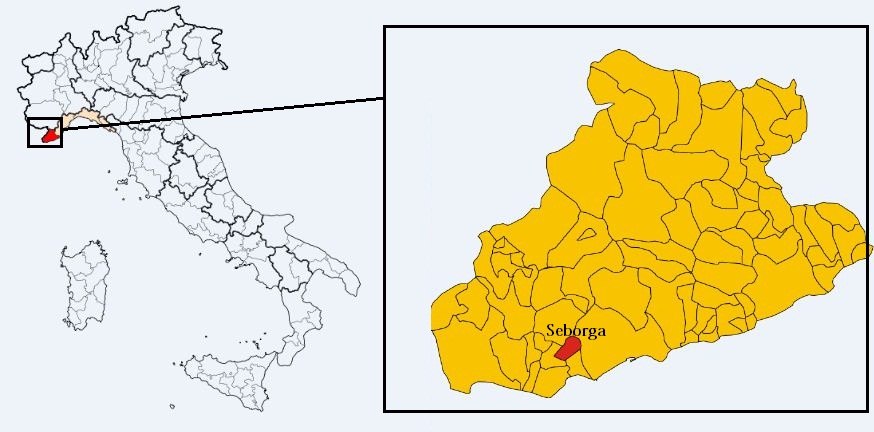
Principality of Seborga - Cistercian-Templar state or hoax?

Seborga was an ancient feud of the Counts of Ventimiglia. In 954 Count Guido bestowed the castle, the Saint Michael's Church in Ventimigila and the big portion of land to the monks of Lerins.  

In 1079 Seborga became a Principality of the Holy Roman Empire. It also boasts a Templar and Cistercian origin. Fact or hoax?

Medieval stories in a Portugese railway station

In the entrance hall of the Sao Bento station in Porto, northern Portugal, is a display in painted tiles of key scenes in medieval history from that country. Events to which early Portuguese Templars may have contributed.

The Temple of Zaamslag, the Netherlands

The Temple of Zaamslag or Tempelhof was a Commandery of the Knights Templar, located at Zaamslag, a village in the south-west of the Netherlands. It is a very important archaeological site. 

Agenda 2012-2013

source: www.ordo-balliolensis.eu

 EVENTS 2012 

- W.E 17 March. Commemoration Jacques de Molay (Paris- F).
- W.E 13 Avril in Erevan (ARM). Creation G.P OSMTH Armenie.
- 20 till 22 April. Orden St Georg in Bad Aibling (D).
- 27 till 29 April. OSMTH. Belgrade (SCERB).
- 5 May. Lecture on an aspect of the new OSMTH politic. St Ingbert (D).
- W.E 19. May. Investiture Ordo Balliolensis. (Ludwigslust - D)
- 1-3 June in Maastricht (NL). Cordon Bleu du St Esprit.
- In Loukovit (Bulg). Investiture OSMTH Bulgaria, is postponed !
- 8 June, in (Bad Dürkheim - D). Trou Normand.
- W.E 10 June. Investiture OSMTH. (St. Petersbourg - R).
- 16 June, Investiture Order St Stanislas in (Wiesbaden - D).
- 23. June. Commemoration André Louis Saumier d'Albi. Chevaliers de France. (Chateauneuf-du-Pape -F) (Arrival 1).
- W.E 23 June. Investiture OSMTH (15 Years Jubil. Prior of Belgium). (Arrival 2)
- W.E 21 Jul. Soirée Beneficielle King of Tanna. (Pforzheim - D).
- W.E 21 Jul. Investiture Orden Heilige Erloser Aragon. (Altenberg/Odenthal - D).
- First W.E of September. Mundial Convent OSMTH (Venise - I). 
- W.E. 08 Sept. Kapitel Schwertbrüder von Livland, (Pommersfelden - D).
- W.E 22 Sept. Grand Convent Sovereign Order Christ the Savior (Kiev. UKR).
 - 28-30 Sept. Orden Cordon Bleu du St Esprit (Austrian Section), Südtirol (A).
- 3 October Ordre du St Sauveur de Monreal. (Thüringen - D).
- 6th October, Chevaliers du Trou Normand-GB in (Whiteley, Hampshire - UK).
- 6th October, Orden der Schwanenritter, (Schloss Banz am Main - D).
- 13th October, Chevaliers du Trou Normand (Rockenhausen - D).
 - Second WE of October. Investiture OSMTH Germany. (Tholey - D).
- 27 October. Ritter Orden vom Stern. (Bamberg - D).
- W.E 10 November. Investiture OSMTH (St. Andrews
- SCOT). - 13 November. Trou Normand.
- End of November or December, Sovereign Knightly Order of Christ the Savior. (Ukr). 

EVENTS 2013 

- End of March. Commemoration Jacques de Molay (Paris- France).
- 23. March, Schwertritter von Livland (Hasselt - BE)
- 19 -21 April. General Convent (Salzburg - A) Deutscher Ritterorden St. Georg.
- W.E 27 April. Elevation Squire OB. (Orval-B). Pending abbatial authorisation.
- About the penultimate Week End of June. Commemoration André Louis Saumier d'Albi (South of France). Chevaliers de France.
- First WE of September. Mundial Convent OSMTH (Bucharest - Rom).

Knights Templar sites in Belgium and Luxemburg

In his book on the Knights Templar in the Low Countries *) Jan Hosten lists many sites of (former) commanderies, Templar houses and farms, as well as smaller possessions such as lands or rights in Belgium and Luxemburg. The locations mentioned in the book are summarized on this Google Map.


*) source Jan Hosten 2006: De tempeliers - de tempelorde tijdens de kruistochten en in de Lage Landen" (in Dutch, translation title: The Knights Templar - the Order of the Temple during the crusades and in the Low Countries); ISBN-13 978-90-430-1061-0; Publ Pearson Education Benelux, Amsterdam

Support TemplarsNow™ by becoming a Patrontipping us or buying one of our Reliable Books


Templar Architecture: Practicality and Praise

"Within a very short period of the formation of the Poor Knights of Christ and the Temple of Solomon, a new style of church architecture began to spread across Western Europe. (...) The Templars did have a distinct advantage however. Being an international organization, it was able to draw on the building practices of the many different nation states that supplied its personnel. The Templars were able to use the very best techniques previously employed by English, French, German and Italian castle builders, supplemented by what they very quickly learned from both adversaries and friends in the Levant.... This ability of the Templars, to look and learn, is often understated in the work or writers who seek to explain the extraordinary feats of the Knights Templar in other ways. (...) 

It is in the realms of domestic and Church architecture that the work of the Templar craftsmen can be seen at its best. The Templars built comparatively few castles, compared to the 9,000 or more Commanderies throughout Europe. Some of these were little more than substantial farms, where necessity and practicality dictated both the buildings themselves and the styles adopted. For example, being in the main farmers, the Templars learned quickly how to build massive barns, a few examples of which still survive. Timber framed, and incredibly beautiful, these buildings were first and foremost ‘functional’, a word that epitomises Templar endeavours at every level. (...)  

The Knights Templar were practical men living in an unforgiving world. They knew about the nuts and bolts of life better than any other organization of their time, and they responded accordingly. That so many of their architectural creations are still to be found (in the case of Churches many still in use) proves the soundness of their techniques and the durability of their craftsmanship."

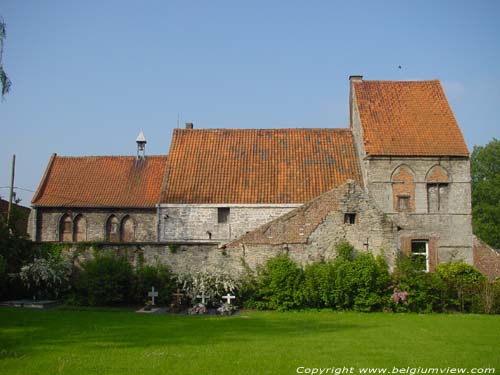
Quotes form a blog by Alan Butler to be found here. Illustration Ferme des Templiers, St Léger, Belgium, source

Support TemplarsNow™ by becoming a Patron, tipping us or buying one of our Reliable Books

Origin of the Knights Templar according to Addison (1842) - part 3

"The above rule having been confirmed by a Papal bull, Hugues de Payns proceeded to France, and from thence he came to England, and the following account is given of his arrival, in the Saxon chronicle.

"This same year, (A.D. 1128,) Hugh of the Temple came from Jerusalem to the king in Normandy, and the king received him with much honour, and gave him much treasure in gold and silver, and afterwards he sent him into England, and there he was well received by all good men, and all gave him treasure, and in Scotland also, and they sent in all a great sum in gold and silver by him to Jerusalem, and there went with him and after him so great a number as never before since the days of Pope Urban." 

Grants of land, as well as of money, were at the same time made to Hugh de Payens and his brethren, some of which were shortly afterwards confirmed by King Stephen on his accession to the throne, (A.D. 1135.) Among these is a grant of the manor of Bistelesham made to the Templars by Count Robert de Ferrara, and a grant of the church of Langeforde in Bedfordshire made by Simon de Wahull, and Sibylla his wife, and Walter their son.

Hugh de Payens, before his departure, placed a Knight Templar at the head of the order in this country, who was called the Prior of the Temple, and was the procurator and vicegerent of the Master. It was his duty to manage the estates granted to the fraternity, and to transmit the revenues to Jerusalem. He was also delegated with the power of admitting members into the order, subject to the control and direction of the Master, and was to provide means of transport for such newly-admitted brethren to the far east, to enable them to fulfil the duties of their profession. As the houses of the Temple increased in number in England, sub-priors came to be appointed, and the superior of the order in this country was then called the Grand Prior, and afterwards Master of the Temple.

Many illustrious knights of the best families in Europe aspired to the habit and the vows, but however exalted their rank, they were not received within the bosom of the fraternity until they had proved themselves by their conduct worthy of such a fellowship. Thus, when Hugh d’Amboise, who had harassed and oppressed the people of Marmontier by unjust exactions, and had refused to submit to the judicial decision of the Count of Anjou, desired to enter the order, Hugh de Payens refused to admit him to the vows, until he had humbled himself, renounced his pretensions, and given perfect satisfaction to those whom he had injured. * The candidates, moreover, previous to their admission,
were required to make reparation and satisfaction for all damage done by them at any time to churches, and to public or private property.

An astonishing enthusiasm was excited throughout Christendom in behalf of the Templars; princes and nobles, sovereigns and their subjects, vied with each other in heaping gifts and benefits upon them, and scarce a will of importance was made without an article in it in their favour. Many illustrious persons on their deathbeds took the vows, that they might be buried in the habit of the order; and sovereigns, quitting the government of their kingdoms, enrolled themselves amongst the holy fraternity, and bequeathed even their dominions to the Master and the brethren of the Temple.

Thus, Raymond Berenger, Count of Barcelona and Provence, at a very advanced age, abdicating his throne, and shaking off the ensigns of royal authority, retired to the house of the Templars at Barcelona, and pronounced his vows (A.D. 1130) before brother Hugh de Rigauld, the Prior. His infirmities not allowing him to proceed in person to the chief house of the order at Jerusalem, he sent vast sums of money thither, and immuring himself in a small cell in the Temple at Barcelona, he there remained in the constant exercise of the religious duties of his profession until the day of his death. * At the same period, the Emperor Lothaire bestowed on the order a large portion of his patrimony of Supplinburg; and the year following, (A.D. 1131,) Alphonso the First, king of Navarre and Arragon, also styled Emperor of Spain, one of the greatest warriors of the age, by his will declared the Knights of the Temple his heirs and successors in the crowns of Navarre and Arragon, and a few hours before his death he caused this will to be ratified and signed by most of the barons of both kingdoms. The validity of this document, however, was disputed, and the claims of the Templars were successfully resisted by the nobles of Navarre; but in Arragon they obtained, by way of compromise, lands, and castles, and considerable dependencies, a portion of the customs and duties levied throughout the kingdom, and of the contributions raised from the Moors. *

To increase the enthusiasm in favour of the Templars, and still further to swell their ranks with the best and bravest of the European chivalry, St. Bernard, at the request of Hugh de Payens, took up his powerful pen in their behalf. In a famous discourse "In praise of the New Chivalry," the holy abbot sets forth, in eloquent and enthusiastic terms, the spiritual advantages and blessings enjoyed by the military friars of the Temple over all other warriors. He draws a curious picture of the relative situations and circumstances of the secular soldiery and the soldiery of Christ, and shows how different in the sight of God are the bloodshed and slaughter perpetrated by the one, from that committed by the other.

St. Bernard then congratulates Jerusalem on the advent of the soldiers of Christ, and declares that the holy city will rejoice with a double joy in being rid of all her oppressors, the ungodly, the robbers, the blasphemers, murderers, perjurers, and adulterers; and in receiving her faithful defenders and sweet consolers, under the shadow of whose protection " Mount Zion shall rejoice, and the daughters of Judah sing for joy."

HUGH DE PAYENS, having now laid in Europe the foundations of the great monastic and military institution of the Temple, which was destined shortly to spread its ramifications to the remotest quarters of Christendom, returned to Palestine at the head of a valiant band of newly-elected Templars, drawn principally from England and France.
On their arrival at Jerusalem they were received with great distinction by the king, the clergy, and the barons of the Latin kingdom, a grand council was called together, at which Hugh de Payens assisted, and various warlike measures were undertaken for the extension and protection of the christian territories.

Hugh de Payens died, however, shortly after his return, and was succeeded (A.D. 1136) by the Lord Robert, surnamed the Burgundian, (son-in-law of Anselm, Archbishop of Canterbury,) who, after the death of his wife, had taken the vows and the habit of the Templars. * He was a valiant and skilful general, but the utmost exertions of himself and his military monks were found insufficient to sustain the tottering empire of the Latin Christians."

source quotes: The History of the Knights Templar, by Charles G. Addison, [1842] ; illustration Bernard de Claivaux, souce Wikipedia.

Support TemplarsNow™ by becoming a Patrontipping us or buying one of our Reliable Books