


On the one hand, we can observe the technical excellence of the Scandinavians, who brought to ship design a real empirical talent for hydrodynamics and a more solid clinker construction. On the other hand, in the Mediterranean, the work of the Byzantines, who took care of the large galley fleets and took this type of ship into the Renaissance.


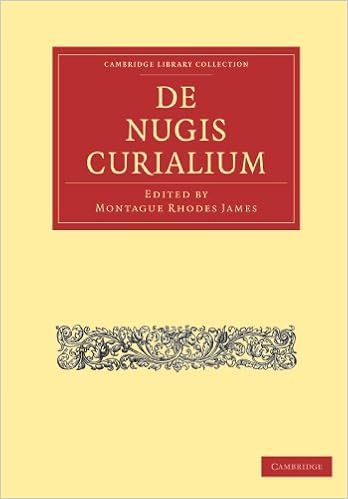

Walter Map (Latin: Gualterius Mappus; French: Gautier Map; 1140 – c. 1210) was an English medieval courtier and writer. Map claimed that he was a man of the Welsh Marches. He was probably born in Herefordshire. Map was a courtier of King Henry II of England, working as clerck in the royal household, and as itinerant justice and justice in Eyre. The King also sent him on missions to Louis VII of France and to Pope Alexander III. Map's studies and employment took him to several church services: canon and precentor of Lincoln, parson of Westbury-upon- Severn in Gloucestershire, prebendary of Mapesbury in the Willesden neighbourhood of London, and in later life (1197) Archdeacon of Oxford.

Unlike what is generally thought, there was no Cistercian Order as a united entity for much of the twelfth Century. (...) Such a Cistercian Order was only invented in the third quarter of the twelfth century. That Order as we usually think of it, an administrative institution that united more than five hundred abbeys by 1215 (when its organization was held up by the Fourth Lateran Council as a model to be emulated), did not appear in 1119 or 1113 or 1098, the dates usually asserted, but much later.
