Cluny Abbey - the islamic link to Christian France

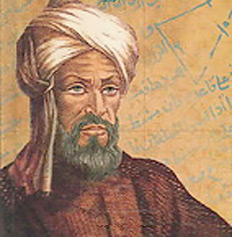
Islamic knowledge contributions to Medieval Europe were numerous, affecting such varied areas as art, architecture, medicine, agriculture, music, language, and technology. From the 11th to 13th centuries, Europe absorbed knowledge from the Islamic civilization. The Benedictin monastery at Cluny played an important part.

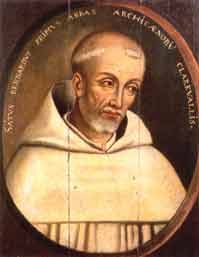
Bernard de Clairvaux - 900 years at Citeaux

The ninth centenary of Bernard de Fontaine’s entry into the Abbey of Cîteaux (1112 or 1113?) was celebrated during the Vocations Year 2012-2013. After founding Clairvaux Abbey in 1115 Bernard became better known as Bernard de Clairvaux, the spiritual leader of the Cistercian Order and (after 1127) of the Order of the Knights Templar.

On this occasion Dom Olivier, abbot of present day Cîteaux Abbey, has asked to pass on the following invitation to all the members of the Order of Cistercians of the Strict Observance O.C.S.O.. This request is relayed here in full.
"Our community is going to celebrate the ninth centenary of St Bernard’s entering of Cîteaux (1112 or 1113?). To mark the event, we are setting up a campaign of prayer for vocations, from 20th August 2012 to 20th August 2013. We invite you to join us with this prayer:

PRAYER FOR VOCATIONS

Most gracious Father,
in setting up the New Monaster your fathers followed the poor Christ into the desert.
Thus they lived the Gospel
by rediscovering the Rule of Saint Benedict in its purity.

You gave Bernard of Fontaine
the ability to make this new life attractive and appealing to others,
in the joy of the Holy Spirit.

Grant that we today, after their example,
may live our charism deeply
in a spirit of peace, unity, humility,
and above all, in the charity which surpasses all other gifts.
May men and women of our time
be newly called to follow the Gospel in monastic life,
in the service of the Church’s mission,
and in a world forgetful of You.

Remember Lord, Cîteaux,
where Bernard arrived with his companions.
May the brothers there
continue to live in the enthusiastic and generative spirit of the founders.

Remember all who live the Cistercian charism.

Remember all Cistercian communities,
those which are aging and those newly-born,
in all parts of the world, north and south, east and west.

Let them not lose courage in times of trial,
but turn to her whom Bernard called the Star of the Sea.

Holy Father,
from whom we have already received so much,
grant us again your blessing
that our communities may grow in numbers,
but above all in grace and in wisdom,
to your glory,
who are blessed for ever and ever.
Amen." 

sources text and illustration
Support TemplarsNow™ by becoming a Patron, tipping us or buying one of our Reliable Books

Troyes de Champagne - the Jewish link to Cistercian and Templar origins

A Hebrew school of great importance, directed by the highest rabbinical authorities and attended by numerous students from various lands, especially Germany and France, flourished at Troyes in the twelfth century. Several synods whose ordinances were adopted in foreign countries assembled at Troyes about 1160. A blog on Jewish roots and Christian sequel and the link to Cistercian and Templar origins.

Templar and Cistercian family ties

Through kindred the Order of the Temple maintained close ties with leaders of society. These relationships were mutually beneficial. What was the situation in the Duchy of Burgundy, the County of Champagne, and the area that is now commonly referred to as Languedoc in southern France?

The Cistercian link to the birth of the Knights Templar 1104-1129

The years 1104 till 1129 are key years of the history of the Knights Templar: the years of origin. What happened in that timespan? And what were the links with that other juvenile Order, the Cistercians?

The Templar workforce

"
Whenever Templars appear in books or films, it is always the knights of the Order in their flowing white surcoats, hacking their way through the dust of battle. But to function properly, the Order needed more than squadrons of combat-hardened knights. It required armies of other men to undertake the hundreds of skilled tasks necessary to keep everything running. The Templar workforce.

Women and the Knights Templar

The "Primitive Templar Rule" of the Templars, originating from the Troyes council of January 1129,  is quite clear on the disadvantages of contact with women. Still, women were involved in the Order. Some examples of Rules and practise.

Ordines Militares - Yearbook for the Study of the Military Orders

The journal Ordines Militares Colloquia Torunensia Historica follows a fifteen-volume book series containing papers from international conferences devoted to the history of military orders “Ordines militares. Colloquia Torunensia Historica”, which have been organized in Toruń every two years since 1981. Thanks to the research done by Professor Karol Górski and his students, the Institute of History of Nicolaus Copernicus University (created in 1945) became the most important Polish centre for research on the history of the Teutonic Order and the Teutonic State in Prussia.

The idea to create an international forum of researchers of military orders in Toruń resulted from the cooperation between Polish and German historians established during conferences organized since 1974 under the auspices of UNESCO, and devoted to the role of the Teutonic Order in history textbooks.

The founder of Toruń’s meetings of researchers of military orders and the editor of the first eleven volumes from the series “Ordines militares” was Zenon Hubert Nowak from the Institute of History and Archival Science of Nicolaus Copernicus University in Toruń. After his death in 1999 Roman Czaja from NCU and Jürgen Sarnowsky from the University of Hamburg took over the organization of conferences and the edition of the series.

The subject of the first volumes from the series “Ordines militares. Colloquia Torunensia Historica” centred around the history of the Teutonic Order; however in the beginning of the 1990s the thematic scope started to include the history of the Hospitallers, the Knights Templar and orders set up in the Iberian Peninsula.

Both the thematic scope of the conference and the growing number of participants have contributed to the fact that the conferences from the series “Ordines militares” have become one of the most important forums for meetings of researchers of military orders from all over the world. The meetings of young researchers dealing with the history of military orders constitute an important element of Toruń’s conferences organized since 2003.

The growing academic prestige of the series “Ordines Militares. Colloquia Torunensia Historica” led to its being transformed into a yearbook devoted to the history of military orders. In keeping with tradition, each volume includes a definite thematic scope, which refers to the subject of a conference from the “Ordines militares” series. Moreover, articles, polemics, research surveys, source monographs and reviews concerning the history of military orders are published there in English, German and French.

source text and illustration www.ordinesmilitares.umk.pl 
 
Support TemplarsNow™ by becoming a Patron, tipping us or buying one of our Reliable Books


Arn Magnusson - the imaginary Swedish Knight Templar

Arn Magnusson is the main character in the Crusades trilogy written in Swedish by author and journalist Jan Guillou. This fictional Swedish character from the Middle Ages is forced to become a Knight Templar. The series is an account of the life of Arn Magnusson, who becomes a witness as well as a catalyst to many important historical events, both in his homeland of Sweden and in the crusades against the Middle East. How much fact is there in the fiction?