
Showing posts with label Middle Ages. Show all posts
Showing posts with label Middle Ages. Show all posts
Templar provincial chapters in medieval times

Making the Crusades possible - the agricultural revolution

Dhimma - diversity and multiculturalism in medieval Islam

11th century Benedictine translations of Islamic manuscripts

10th Centrury worldy dominance over the church

Co-habitation of church and state in early 11th century France

Diversity and multiculturalism in the medieval world - theory and practise

Racial changes in depicting Saracens in the Middle Ages

Setting the stage for the Middle Ages - daily life
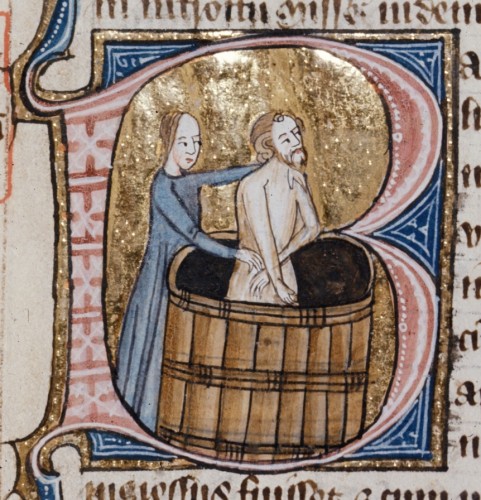
"The sixth century marked the beginning of the Dark Ages in western Europe. While the Byzantine Empire generally prospered, despite its loss of territory, western Europe spent the six centuries after the death of Justinian in chaos, war, cultural degeneration, superstition, ignorance, and poverty. A harsh setting.
Financing the Crusades - the "lesser men" and their partnerships

Financing the Crusades - mortgages, loans and gifts
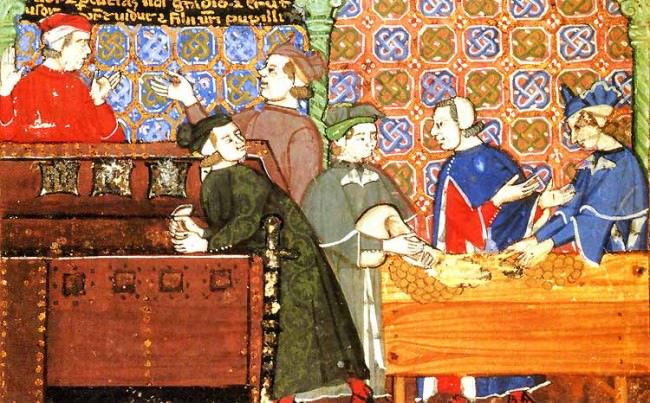
"(It were) loans by which crusaders perhaps most commonly financed their journeys. They borrowed from kings and princes, from monasteries and bishops, from lay lords and merchants, from whoever had money to lend.
Cultural development in the Middle Ages: Barbarians, Christians and Muslims

"The Middle Ages were not only a period of European civilization. There was the western medieval period and that of the Eastern Empire, which still survived among the splendours of Byzantium for 1000 years after the fall of Rome. During those same centuries a great Arab civilization flourished, while in Europe there was a more or less clandestine, but very lively Jewish culture. The boundaries between these different cultural traditions were not as marked as people think today.
Sufism in Muslim Religious Trends during the Middle Ages

Ordines Militares - Yearbook for the Study of the Military Orders

The idea to create an international forum of researchers of military orders in Toruń resulted from the cooperation between Polish and German historians established during conferences organized since 1974 under the auspices of UNESCO, and devoted to the role of the Teutonic Order in history textbooks.
The founder of Toruń’s meetings of researchers of military orders and the editor of the first eleven volumes from the series “Ordines militares” was Zenon Hubert Nowak from the Institute of History and Archival Science of Nicolaus Copernicus University in Toruń. After his death in 1999 Roman Czaja from NCU and Jürgen Sarnowsky from the University of Hamburg took over the organization of conferences and the edition of the series.
The subject of the first volumes from the series “Ordines militares. Colloquia Torunensia Historica” centred around the history of the Teutonic Order; however in the beginning of the 1990s the thematic scope started to include the history of the Hospitallers, the Knights Templar and orders set up in the Iberian Peninsula.
Both the thematic scope of the conference and the growing number of participants have contributed to the fact that the conferences from the series “Ordines militares” have become one of the most important forums for meetings of researchers of military orders from all over the world. The meetings of young researchers dealing with the history of military orders constitute an important element of Toruń’s conferences organized since 2003.
The growing academic prestige of the series “Ordines Militares. Colloquia Torunensia Historica” led to its being transformed into a yearbook devoted to the history of military orders. In keeping with tradition, each volume includes a definite thematic scope, which refers to the subject of a conference from the “Ordines militares” series. Moreover, articles, polemics, research surveys, source monographs and reviews concerning the history of military orders are published there in English, German and French.
source text and illustration www.ordinesmilitares.umk.pl
Support TemplarsNow™ by becoming a Patron, tipping us or buying one of our Reliable Books
Subscribe to:
Posts (Atom)