Templar wealth: personal austerity, liturgical richness

Abbot Bernard of Clairvaux had noted in his letter "In praise of the new knighthood" that the Templars led an austere lifestyle and that their clothing and armour was undecorated, in contrast to secular knights' flamboyant appearance. (...) Overall the Templars appear to have stuck with this image of austerity. Nothing should be wasted on themselves; all possible money should be saved for the help of the Holy Land. The exception to this was in their attitude to divine worship.

Friday, 13 October 1307 - an affair of state

The arrest of the French Templars on Friday 13 October 1307 left its mark on the minds of contemporaries. It even gave rise to myths and superstition linked to the choice of the date of Friday the 13th, which today has become both a day of misfortune for the superstitious and a day of luck for the French national lottery. Unlike often thought, the arrests were an initiative of the French King Philip the Fair, without consent of or cooperation by Pope Clement V who alone held supreme authority over the Templar Order.

The facts on Mount Sion and the crusaders

Ever since the Priory of Sion (or Zion) was made famous by popular literature as well as a recent relaunch of a similarly named association, Sion rings a bell with people interested in the crusades in general and Templars in particular. What are the facts?

Louis IX and his Holy relics

"In 1236, the Latin emperor of Constantinople, Baldwin II, approached the West for help in defending his moribund empire, one of the Latin States of Greece, born of the diversion of the fourth crusade in 1204. Early in 1237 he went to meet the French king Louis IX in Paris, telling him that, having run out of resources, he was obliged to borrow money against the relics with which Constantinople was still crammed, even after its sacking of 1204. Owing to his inability to repay the loans, these relics were at risk of falling into his creditors hands. On two occasions Louis IX redeemed the pledge. 

The high expenses of Templars in the Holy Land

Keeping the Templar army in the Holy Land took considerable effort. Some figures.

The medieval religious Orders as peace negotiators

"The religious military orders of the Middle Ages are often characterised by the image of soldier-monks, dedicated to combat, prayer and nothing else. This image has been strongly nuanced by contemporary historiography. Today's authors add to the military function of the orders, assistance, hospitality and activities in the economic, social, religious, artistic and other fields. Some examples. 

Templars and water

The Templars carefully chose the site where they would build their "domus". One of the most important points was accessibility to water. What was the situation at Arville Commandery, France?
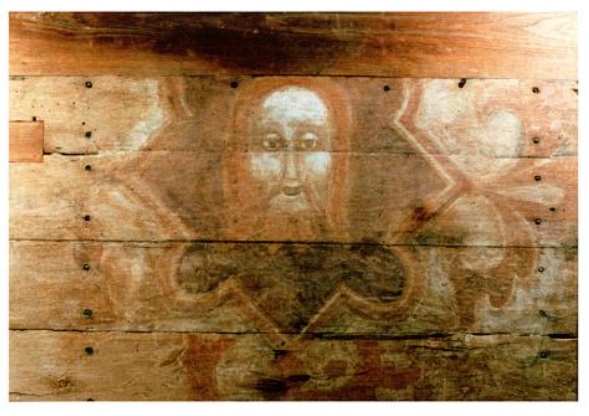
The Templecombe Head - Templar, lid or relic?

The Templecombe Head is an interesting artefact. The panel depicts a head, which was interpreted as that of Jesus. It was discovered in 1944 in the plaster covered ceiling of a woodshed adjacent to a common cottage in the village of Templecombe, Somerset, England. A quick scan by TN rendered a lot of data. A brief summary of the main points.

An unknown letter from Jacques de Molay found

 Letter from Jacques de Molay

"A recent finding at the Archives of the Crown of Aragon, has produced an unknown letter from Jacques de Molay, the last Master of the Order of the Knights Templar, addressed to Ramon de Bell-lloc, Commander of the Order, dated 21st January 1296. What is this letter about?