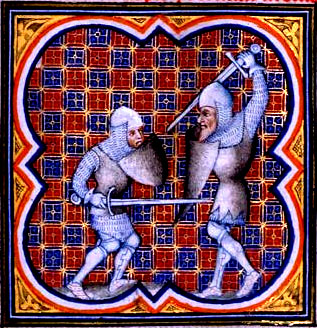
Templar importance in Spain in the 1130s preceeds their Oriental role

"Though the nature of Templar activities during the 1120's and 1130's remains obscure, they were clearly successful, despite their poverty. Most contemporary evidence of the early Templars stems from charters, bequests, and clerical correspondence. Their most notable activity at this time was property acquisition. By 1130, the Templars were receiving grants of land and money from southern France and Spain. 

Templars and Assassins: a matter of mutual hatred

"The Assassins were a radical group of Shi'ite Muslims who practiced terrorism against their enemies. If a leader, usually Muslim, opposed them, they murdered him. In 1173, the Old Man of the Mountain, leader of the Assassins, sent a peace envoy to Amalric, the Crusader King of Jerusalem, proposing an alliance. On his way back from the conference with the King, the Assassin envoy was attacked and killed by a band of Templars who were led by a one-eyed knight named Walter de  Mesnil. What was the background of this event?

March 18, 1314 - the final stage of the Temple

"It was the final act of the Templar Trial which would set the stage for the legends that the Templars have survived to this day. On March 18, 1314 (although also March 11 has been mentioned as the most probable date), Jacques de Molay, Geoffroi de Charney, the Preceptor of Normandy, and two other high Temple officials were brought out to confess their sins in public ceremony on the Ile des Javiaux island in the Seine River, Paris, before being sentenced to perpetual imprisonment. Things went differently.

The Templar Order - home and prison to knights and criminals

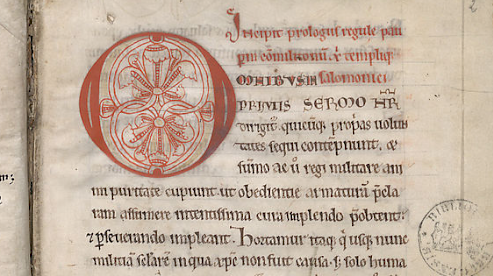
 "The initial Latin Rule was public. Later translations and revisions of the Rule were not. During its first translation, in the 1140's, the Rule was removed from the public eye and revised, from then on, only within the Order. (...) The most likely reason for secrecy was military security; most of the changes involved specific military tactics and infrastructure. (...)

The obscure early years of the Knights Templar

"The first ten years of the Temple were difficult. According to a later chronicler (they were ignored by contemporary chroniclers in Palestine), the original Templars were so poor that they had to rely on local charity for food, clothing, and supplies. They had no specific uniform. Everything from their clothes to their quarters on the Temple Mount consisted of dilapidated handme-downs. 

Early Templar military tactics for protecting pilgrims and more

The nature of the earliest Templars' duties in Palestine made them a more mobile and disciplined group than the Frankish military forces. The Templars' original purpose was "that, as far as their strength permitted, they should keep the roads and highways safe from the menace of robbers and highwaymen, with especial regard for the protection of pilgrims." (...) For that they developed their own, oriental military tactics, very unlike normal Western practises.

The Arabization of the Knights Templar during the Crusades, 1119-1314

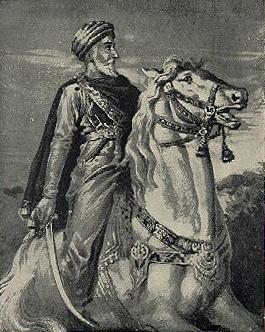
The military orders, especially the first, the Order of the Poor Knights of the Temple of Solomon (Knights Templar) played a critical role in the preservation of the Crusader kingdoms in Palestine between 1119 and their fall in 1291. It is generally acknowledged that part of the Templars' success, in both Palestine and Spain, stemmed from their ability to deal with the Muslim enemy in a variety of situations. 

The Crusades - from chaos to shared ideal in Christian Europe

"Following the collapse of the Carolingian Empire in the 9th century, Christian Europe had wrestled with increasingly senseless and uncontrollable violence. Muslim and Viking invasions during that time caused internal disintegration that eliminated all centralized power. By the 11th century, knights--even kings--had become indistinguishable from brigands." How did the Crusades change this?

Crusader-Muslim Relationships during the Crusades

ln the late eleventh century, when the first crusade arrived in the Middle East, the region was not predominantly Muslim. The population was divided between Greek and other eastern Christians, Jews, Muslims, and minority religious groups which did not fit precisely into any of the three great religions.