%20Priory%20of%20Sion.png)
Templars and a New (or Old?) Priory of Sion

Reliable Books on the Knights Templar
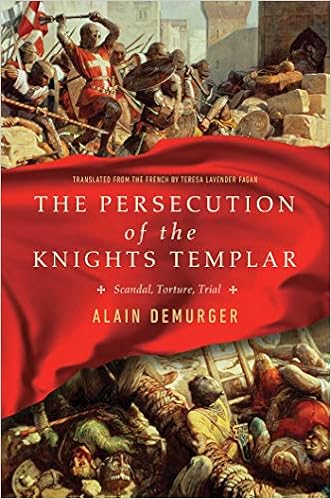
This library will be ever expanding when reliable books are added. Sound scientific sources are most relevant for being selected, as are our own preferences based on experience.
Templars and the Black Madonnas

Most cathedrals were also home to Black Madonnas, of which about 400 to 500 are present in Europe, depending on how they are classified. There are at least 180 Vierges Noires in France, and there are hundreds of non-medieval copies as well.
Water power, a Templar tool for industrial development

Godfrey of Boullion - founder of the proto-Knights Templar?

The Templar fleet - mistery and fact

In many a conspiracy tale the Templar fleet plays a starring role, spiriting the Order's treasure to safety at the moment of its dramatic collapse in 1307. But how substantial was this fleet in reality, and did it ever amount to a serious naval force?
Maritime Templar Activities in Southern France

5 Great Forces Transforming the Medieval Church
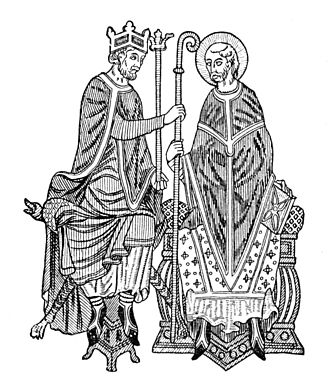
900 Years Council of Nablus, January 16, 1120 - synod, parliament and Templar kick-off

To face up to these challenges, the Council of Nablus was convened. This council of ecclesiastic and secular lords of the crusader Kingdom of Jerusalem was held on January 16, 1120. It was convened by Warmund, Patriarch of Jerusalem, and King Baldwin II of Jerusalem.
The council established twenty-five canons (decrees) dealing with both religious and secular affairs. As such it provided the first written laws for the kingdom. Therefore it can be considered both a parliament and an ecclesiastical synod.
The Nablus Council was probably also where Hugues de Payens obtained permission from King Baldwin II of Jerusalem and Warmund, Patriarch of Jerusalem to found the Knights Templar. But direct reference to the Templars as such or their recognition as a group is missing in the decrees. There is only mention that "Achardus, prior of the Temple of the Lord", was present. This probably pertains to Achardus de Aroasia, "prior Templi Domini" (Vita S. Joh., episcopus Morinorum; AA.SS.: in the 12th century, January 27).
Another source mentions: "Pauperes commilitones Christi Templique Salomonici, later known as the Knights Templar.
Here begins the Council of Nablus
In the 1120th year of the Incarnation of the Lord - after, as our sins demand, the country of Jerusalem was devastated by many calamities and for four years it was laid waste, with its crops consumed by locusts and its walls by frequent Saracen assaults and plots, and with so many of its pilgrims and citizens murdered - a man of dove-like innocence and a pupil of humility, the patriarch Warmund, and a son of good fortune, Baldwin, the second King of the Latins of Jerusalem, readying to meet the danger threatening the citizens with prayers of piety and works of justice, prodded by Divine Inspiration to raise up the Church and fix firm the country, entered into counsel with the prelates of the Church and the leading men of the kingdom in the second year of his reign and of his patriarchate, on the 17th Kalends of February [January 16], at the city of Nablus of Samaria. And, as the need of the land demanded, for the correction of the fallen people, they established the decrees which we have written below.
Subscribe to:
Posts (Atom)