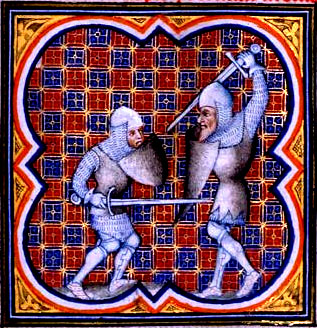
The Crusades - from chaos to shared ideal in Christian Europe

Crusader-Muslim relationships during the Crusades

Templar wealth: personal austerity, liturgical richness

Friday, 13 October 1307 - an affair of state

The facts on Mount Sion and the crusaders

Louis IX and his Holy relics

"In 1236, the Latin emperor of Constantinople, Baldwin II, approached the West for help in defending his moribund empire, one of the Latin States of Greece, born of the diversion of the fourth crusade in 1204. Early in 1237 he went to meet the French king Louis IX in Paris, telling him that, having run out of resources, he was obliged to borrow money against the relics with which Constantinople was still crammed, even after its sacking of 1204. Owing to his inability to repay the loans, these relics were at risk of falling into his creditors hands. On two occasions Louis IX redeemed the pledge.
The high expenses of Templars in the Holy Land

The medieval religious Orders as peace negotiators

Templars and water

The Templars carefully chose the site where they would build their "domus". One of the most important points was accessibility to water. What was the situation at Arville Commandery, France?
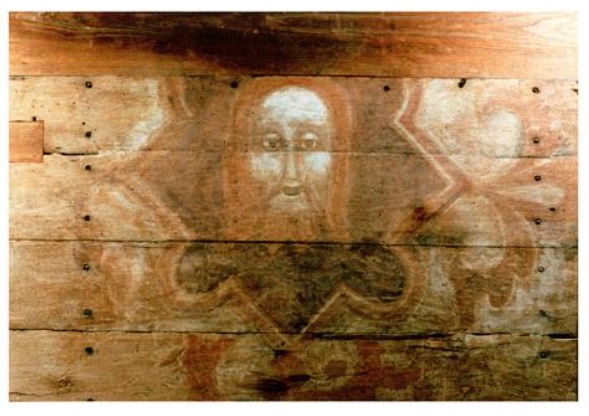
The Templecombe Head - Templar, lid or relic?
An unknown letter from Jacques de Molay found

"A recent finding at the Archives of the Crown of Aragon, has produced an unknown letter from Jacques de Molay, the last Master of the Order of the Knights Templar, addressed to Ramon de Bell-lloc, Commander of the Order, dated 21st January 1296. What is this letter about?
Commemoration of the 707th anniversary of the death of Jacques de Molay

De Molay, born between 1244-1249, was put to death in Paris by the King of France. He was the 23rd and last Grand Master of the Knights Templar although at the time he was simply indicated as the Master from Outremer. He lead the Order from 20 April 1292 until it was dissolved by order of Pope Clement V in 1307. What is known of his last moments?
Jacques de Molay, the last Templar Master - youth and reception

Jacques de Molay was born somewhere between 1244 and 1249, most probably in Molay in the present day Haute-Saône Department of France. What were his early years like?
Did Templars found Switzerland?

The Origin of the Templars according to Jacques de Vitry ca 1220

Horses in the Temple

Location of the first Templar fortress revealed
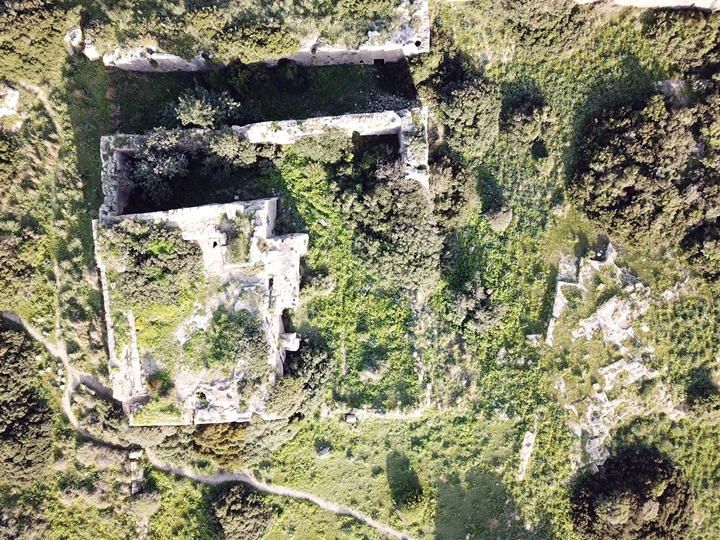
In the Middle Ages the important coastal road from Acre and Haifa to Jerusalem ran through a narrow, probably man made passage in the sandstone ridge that runs parallel to the coast line directly to the east of Atlit peninsula. In primary sources this passage is called amongst others Petra Incisa ("carved rock") or Districtum/Destrictum, Destroit or Détroit ("strait") . The setting made the site an ideal location for robbers to ambush pilgrims and other travelers. As even King Baldwin I of Jerusalem discovered in 1103, when he was wounded by robbers in the area. What is the history of this remarkable place and what have the Templars to do with it?
Hugues 1er de Champagne, from Count to Templar knight

On 1
January 1093, Hugues inherited from his other brother Eudes (Odo) IV the Counties of
Troyes, Vitry-le-François and Bar-sur-Aube. Only to abdicate in 1125 to become a Templar knight in the Holy Land.
How did his lifes develop from being a rich and important French nobleman to becoming a poor Templar?
A new Jerusalem in medieval Scandinavia

The Chinon Parchment of 1308 - Templars absolved

The relationship between Hugues de Payns and Bernard de Clairvaux

Ships and navigation during the Middle Ages

On the one hand, we can observe the technical excellence of the Scandinavians, who brought to ship design a real empirical talent for hydrodynamics and a more solid clinker construction. On the other hand, in the Mediterranean, the work of the Byzantines, who took care of the large galley fleets and took this type of ship into the Renaissance.
The Origin of the Templars according to Michael the Syrian ca 1180

Fate of the Templars outside France during the arrests of 1307-1308

Subscribe to:
Comments (Atom)