Showing posts with label Bernard. Show all posts

Abbot Bernard de Clairvaux - Asceticism, Ailment and Growth

In 1112, after living the first 22 years of his life as a member of Burgundian nobility, Bernard de la Fontaine (1090/1091 - 1153) entered the Cistercian monastery at Citeaux, accompanied by many members of his family and friends. In only three years Bernard developed as a remarkable monk. So much that in 1115 he and members of his company were entrusted by Citeaux abbot Stephen Harding with a significant mission: to establish a new Cistercian monastery at Clairvaux. How did Bernard and Clairvaux develop? A tale of hardship.

Bernard de Clairvaux' youth - from squire to monk

Bernard de Clairvaux (1090/1091 - 1153), Cistercian abbot and theologian, is renowned for his sermons and letters that eloquently blend Christian mysticism with the ideals of knighthood. However, the first 21 years of his life (the years of legal minority) he lived as Bernard de la Fontaine the life of a member of the Burgundian nobility, being a squire himself in direct contact with knights. What is known of these early years?

Jerusalem - Templar purpose and alibi in Bernard's "De laude novae militiae"

De laude novae militiae
, the famous eulogy written by Bernard of Clairvaux during the stay of Hugues de Payns in Europe in 1127 or 1128, contains several thoughts about the functions of the new Templar chivalry and the battles that the Templars are waging in the East. What details about the headquarters of the order exist and what conception of Jerusalem prevailed in the clerical consciousness of the first half of the 12th century? (...)

The relationship between Hugues de Payns and Bernard de Clairvaux

Often it is suggested that the Templar founder and first Master Hugues de Payns and the Templar's spiritual inspirer, the Cistercian abbot Bernard de Clairvaux must have been well acquainted at the onset of the start of the group that became known as the Templars (between 1114 and 1120). One of the arguments is that they both came from noble houses in the Champagne region, so must have known each others. And perhaps even worked together in the founding of the Templar Order. What are the facts?

The Crusades, a solution to violence in Christianity
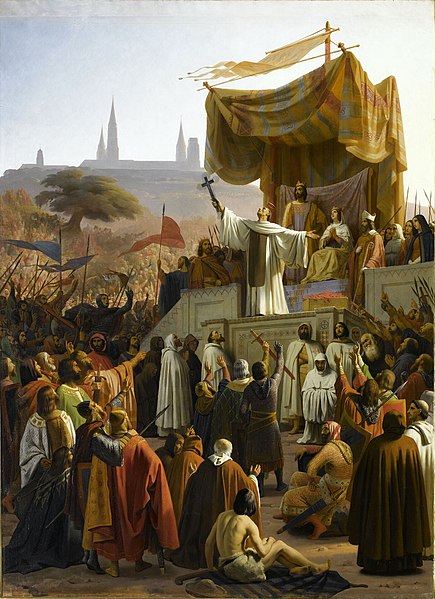
"The crusades were originally meant to redeem Europe from its violent nature, not to extend that violence. In this way, the crusades were intended to be a military pilgrimage of penance for the men who participated, a way of channeling the evil of their violence into a godly purpose. It was this idea that Bernard latched onto when he aided in the forming of the Templar order.