
Birth of the Knights Templar - a summary

Aristocratic and monastic primacy in the 12th century County of Champagne, France

The Templar's First Task - Highway Police in Peace Time

Evrard des Barres - Templar Grand Master and Cistercian monk

Templars in Sweden?

The Templars and Nostradamus - myth or truth?

In his book Nostradamus and the Lost Templar Legacy (2003) Rudy Cambier presents the results of his decade long research and analysis of the verses of Nostradamus' 'prophecies'. He argues that the language of those verses does not belong in the 16th Century, nor in Nostradamus' region of Provence, France. An intriguing alternative vision unfolds.
Cluny Abbey - the islamic link to Christian France
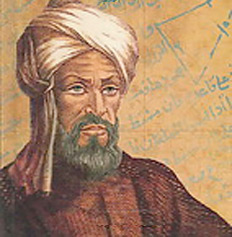
Islamic knowledge contributions to Medieval Europe were numerous, affecting such varied areas as art, architecture, medicine, agriculture, music, language, and technology. From the 11th to 13th centuries, Europe absorbed knowledge from the Islamic civilization. The Benedictin monastery at Cluny played an important part.
Bernard de Clairvaux - 900 years at Citeaux
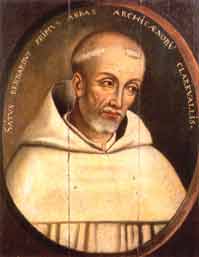
On this occasion Dom Olivier, abbot of present day Cîteaux Abbey, has asked to pass on the following invitation to all the members of the Order of Cistercians of the Strict Observance O.C.S.O.. This request is relayed here in full.
"Our community is going to celebrate the ninth centenary of St Bernard’s entering of Cîteaux (1112 or 1113?). To mark the event, we are setting up a campaign of prayer for vocations, from 20th August 2012 to 20th August 2013. We invite you to join us with this prayer:
PRAYER FOR VOCATIONSMost gracious Father,in setting up the New Monaster your fathers followed the poor Christ into the desert.Thus they lived the Gospelby rediscovering the Rule of Saint Benedict in its purity.You gave Bernard of Fontainethe ability to make this new life attractive and appealing to others,in the joy of the Holy Spirit.Grant that we today, after their example,may live our charism deeplyin a spirit of peace, unity, humility,and above all, in the charity which surpasses all other gifts.May men and women of our timebe newly called to follow the Gospel in monastic life,in the service of the Church’s mission,and in a world forgetful of You.Remember Lord, Cîteaux,where Bernard arrived with his companions.May the brothers therecontinue to live in the enthusiastic and generative spirit of the founders.Remember all who live the Cistercian charism.Remember all Cistercian communities,those which are aging and those newly-born,in all parts of the world, north and south, east and west.Let them not lose courage in times of trial,but turn to her whom Bernard called the Star of the Sea.Holy Father,from whom we have already received so much,grant us again your blessingthat our communities may grow in numbers,but above all in grace and in wisdom,to your glory,who are blessed for ever and ever.Amen."
sources text and illustration
Support TemplarsNow™ by becoming a Patron, tipping us or buying one of our Reliable Books
Troyes de Champagne - the Jewish link to Cistercian and Templar origins

A Hebrew school of great importance, directed by the highest rabbinical authorities and attended by numerous students from various lands, especially Germany and France, flourished at Troyes in the twelfth century. Several synods whose ordinances were adopted in foreign countries assembled at Troyes about 1160. A blog on Jewish roots and Christian sequel and the link to Cistercian and Templar origins.
Subscribe to:
Posts (Atom)