Development of the novelty of the right of clerical self-defense 1120-1176

Sometime between 14 January and 13 September 1120 (...) at the hands of Patriarch Warmund, Hugh of Payns, Godfrey of Saint-Omer, and certain other French knights pledged to live “more canonicorum regularium” (as regular canons, not monks, as is so commonly thought) and accordingly took vows of poverty, chastity, and obedience. In return, Warmund and his fellow bishops enjoined upon these consecrated knights, for the remission of their sins, the principal task of keeping roads and highways safe for pilgrims against thieves and highwaymen. (...) These new armed, consecrated knights, soon to be known as ‘Templars’, were revolutionary indeed and required nearly another twenty years before they were approved completely by Rome.

Nablus 1120 - the medieval ban of clergy bearing arms lifted

"Between 1049 and 1095, no fewer than thirteen councils and synods had damned clerical armsbearing. At nine of these thirteen assemblies, three different popes and six papal legates presided. The reforming papacy seemingly could not have been clearer on this issue. After that there is almost nothing in the decrees of the seven so-called ecumenical or general councils held between 1123 and 1312. (...)

Muslim-Christian alliance in early crusader times
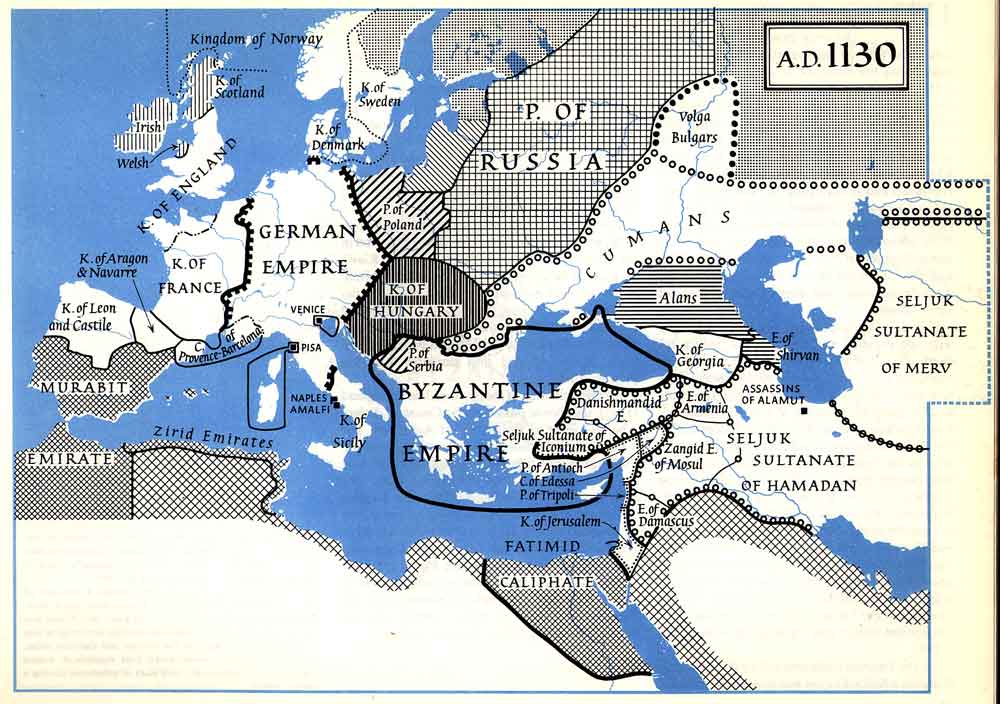
Before and at the start of the First Crusade "An alliance existed between the Crusaders and the (muslim; TN) Fatimid rulers of Egypt (...) By the latter decades of the eleventh-century, these states (Byzantium and Fatimid Egypt; TN) had only known peace with each other in living memory, which is remarkable for the medieval world.

Development of ecclesiastical Templar legistlation

"The ecclesiastical legislative body by which the friars of the Temple govern themselves underwent many logical adaptations to suit the times, along its existence. In spite of this, they channeled themselves in two different and complimentary but equally valid points: on the one side papal bulls and on the other the general chapters.

Noble legacies to the Knights Templar

"An astonishing enthusiasm was excited throughout Christendom on behalf of the Templars. Princes and nobles, sovereigns and their subjects, vied with each other in heaping gifts and benefits upon them, and scarce a will of importance was made without an article in it in their favour. 

Templar hospitals normal features in medieval France

"The care of hospitals also falls within the remit of the military order of the Knights Templar. (...) Alms are one of the concerns of their rules. To the poor one must give broken and unfinished bread during meals; the old robes of the brothers belonged by right to the lepers. The meat ration of two knights is calculated so that there would be enough to feed two poor.

Muslim-Christian coexistence during the crusading period

"(...) During the Crusades, coexistence manifested itself in another way. Richard the Lionheart (king of England, 1189–1199) attempted to arrange a marriage between his sister and the brother of Saladin (the most famous hero of the Counter-Crusade and founder of the Ayyubid Dynasty). Intermarriage between Christians and Muslims was commonplace in Anatolia, and it was quite frequent between the Seljuk Turkish (who had conquered Byzatium in 1071, TN) and Byzantine elite.

At the same time, recent scholarship (...) has uncovered that many Byzantine women who married into the Seljuk Dynasty maintained their Christian religious practices and passed them onto their children (future Seljuk sultans), many of whom were baptized at the Hagia Sophia, the main cathedral in Constantinople. A consciousness of conversion did develop in the medieval period, but a thirteenth-century Cilician Armenian law code suggests that conversions to Islam were reversible."

This blog quotes from "Diversity in the Medieval Middle East - Inclusions, Exclusions, Supporters, and Discontents" by Rachel Goshgarian, Chapter 9 in Lucia Volk's The Middle East in the World: An Introduction (Foundations in Global Studies) (Routledge, 2015) on www.academia.edu; source illustration the Comnenus mosaics in the Hagia Sophia, Istanbul, Public Domain, source Wikipedia

Support TemplarsNow™ by becoming a Patrontipping us or buying one of our Reliable Books

Dhimma - diversity and multiculturalism in medieval Islam

"It might be surprising to imagine that the societies of the medieval Mediterranean were brimming with diversity.  (...) Linguistic and religious diversity were facts of everyday life throughout the medieval world. And—very much like today—diversity had its share of proponents and its discontents.

11th century Benedictine translations of Islamic manuscripts

"Peter the Venerable (c. 1092 – 25 December 1156) was between 1122 and 1156 abbot of the Benedictine abbey of Cluny. Despite his active life and important role in European history, Peter's greatest achievement is his contribution to the reappraisal of the Church’s relations with the religion of Islam.