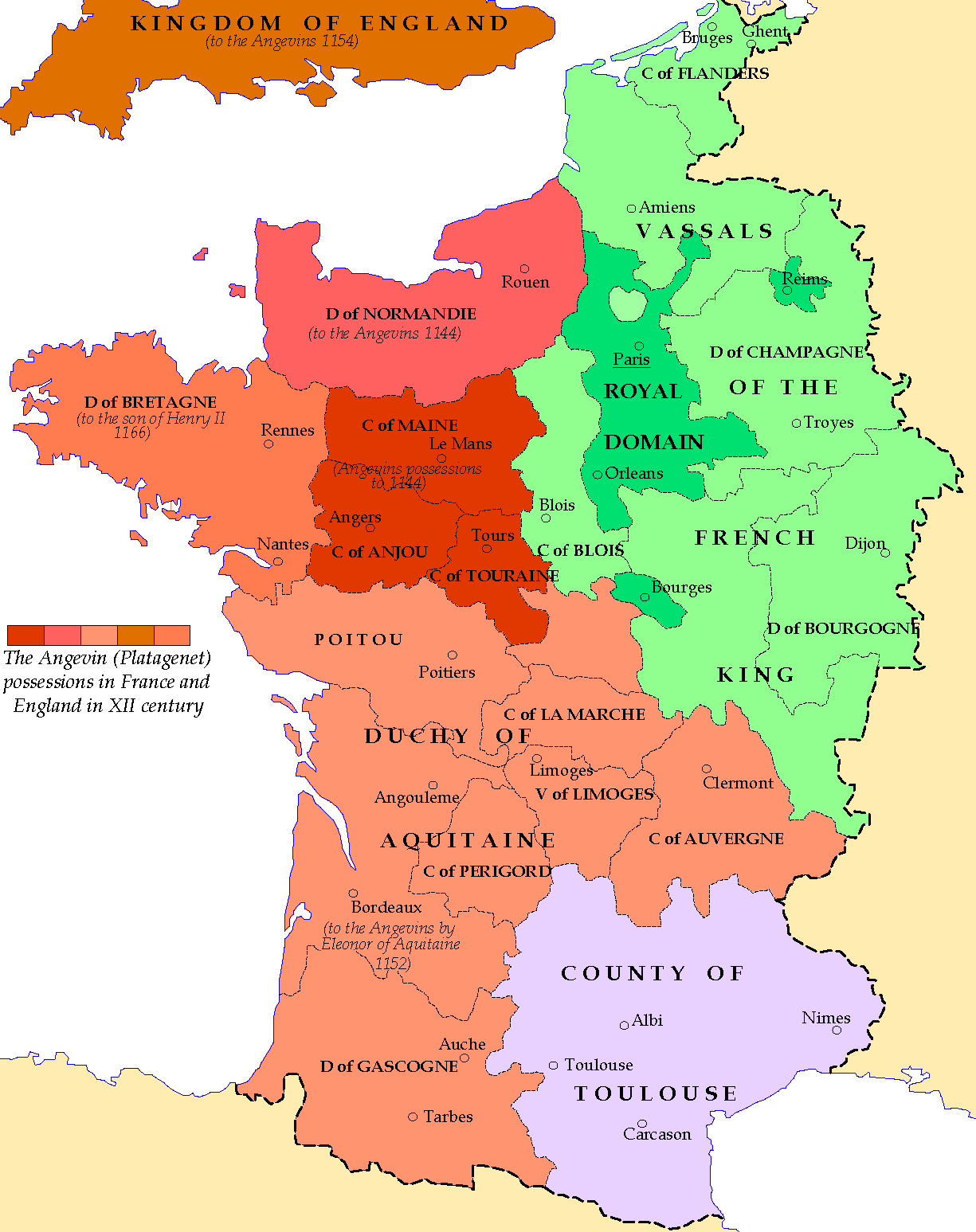
Troyes - trading hub and Templar cradle

The court of one of the founding fathers of the Knights Templar, Hugues I Count of Champagne (c.1074–1130) stood at the old city of Troyes. Troyes has been in existence since the Roman era, as Augustobona Tricassium. It stood at the hub of numerous highways, primarily the Via Agrippa. Key to its international position.

Agnus Dei - a papal and Templar symbol

During his inauguration on March 19, 2013 pope Francis used a papal staff or ferula which shows on the front of the cross in the center the Agnus Dei (Lamb of God) and at the end of the limbs the four Evangelists. On the back of the cross are in the center Jesus with the monogram PX and at the end of the limbs the Fathers of the Eastern and Western Church Augustine and Ambrose, Athanasius and John Chrysostom.

xxxxx
Pope Francis, March 19, 2013 source abc-news templar seal source

source


In heraldry, a Lamb of God (or paschal lamb, or agnus Dei) is a lamb passant proper, with a halo or charged with a cross gules, and the dexter forelimb reflexed over a cross staff from which a pennon of St. George (Argent a cross gules) is flotant. The seals of the Masters of the Temple in England: of Aimery de St Maur, 1200, Robert of Sandford, 1241, Richard of Hastings, 1160–85, and William de la More, 1304, showed the agnus Dei. To drive home the point his counter-seal had the head of John the Baptist with the inscription 'I am the guarantor of the lamb'.

Pope Benedict XVI holds the same ferula with agnus Dei
in mass at St Peter's on New Year's Day 2011

source
Some of the seals of the English Templars were a semi-typical Pascal lamb bearing sometimes, not the flag of St George (or the cross), but the Beauseant, the battle banner of the order. The motto accompanying the seal reads TESTIS SUM AGNI, (not Agnus as is correct), meaning "I am a witness to the Lamb". The translation of the Latin word AGNI raises several areas of contention, however a similar word AGNITIO translates to "of the nature of the mind or wisdom". Note the missing of the word Dei.


source

The stone carving to the left of a paschal lamb, or Agnus Dei, is located in the west wall of the Templar chapel of St Michael's Church, Herefordshire, England. According to Brighton it is a symbol of St John the Baptist and a motif used by both the Medieval Templar and Hospitaller orders. This example carries both a staff and banner sporting Templar crosses. Image ©Simon Brighton.


This website (in German, use Google for translation) elaborates on the ferula or pope staff. It also shows in detail the ferula with crucifix, ordered by pope Paul VI in 1963 often used by popes Paul VI, John Paul II and occasionally pope Benedict XVI.

based on wikipedia.org

Champagne, the Templar cradle

To understand the origin of the Knights Templar and the mechanisms that lead up to their birth, one should explore their place of origin. Standard historical belief places their origin in Jerusalem in the year 1118, 1119 or 1120. This, however, is not the case. The cradle of the Knights Templar stood at the court of the Count of Champagne in the French town of Troyes. The establishment of a fraternity at Jerusalem was just another step in a development that started years before.

Pope Francis - a Templar and interfaith link?

On 13 March 2013 (13-3-13) Cardinals of the Roman Catholic Church elected Cardinal Jorge Mario Bergoglio, born Dec 17, 1936, in Buenos Aires, Argentina, as the 266th pope.

Bergoglio chose to take the name Francis, referring to Saint Francis of Assisi. Francis, founder of the Franciscan Order. Saint Francis was born at Assisi in Umbria, in 1181 or 1182. He died there on 3 October, 1226.

699th Commemoration death of Jaques de Molay

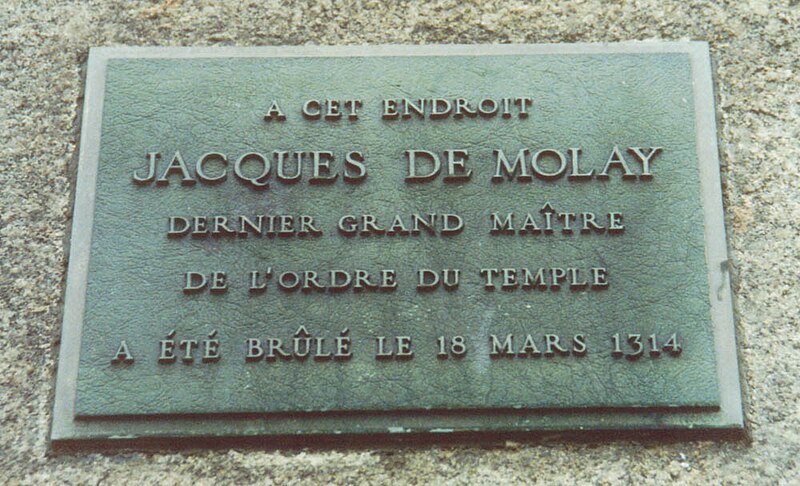
On March 18, 2013 we commemorate the 699th anniversary of the death of the last official Grand Master of the Knights Templar, Jacques de Molay. De Molay, born in 1244 was put to death in Paris by the King of France on 18 March 1314. He was the 23rd and last Grand Master of the Knights Templar, leading the Order from 20 April 1292 until it was dissolved by order of Pope Clement V in 1307.

Though little is known of his actual life and deeds except for his last years as Grand Master, he is the best known Templar, along with the Order's founder and first Grand Master, Hugues de Payens(1070–1136). Jacques de Molay's goal as Grand Master was to reform the Order, and adjust it to the situation in the Holy Land during the waning days of the Crusades. As European support for the Crusades had dwindled, other forces were at work which sought to disband the Order and claim the wealth of the Templars as their own. King Philip IV of France, deeply in debt to the Templars, had De Molay and many other French Templars arrested in 1307 and tortured into making false confessions. When de Molay later retracted his confession, Philip had him executed by burning upon a scaffold on the Paris Ile des Juifs in the River Seine on 18 March 1314.

Death-site plaque of Jaques de Molay on Isle des Juifs, Paris
source text and illustrations wikipedia.org

Celestine V - the 13th century abdicating pope

Pope Saint Celestine V (1215 – 19 May 1296), was born Pietro Angelerio to parents Angelo Angelerio and Maria Leone in a town called Sant'Angelo Limosano, in the Kingdom of Sicilia (Sicily). He showed an extraordinary disposition toward asceticism and solitude, which did not fit with his vocation as Pope. Consequently, he was one of the few Popes to resign.

Popes Benedict XVI and Celestine V - a templar link? - quote


"On 28th April 2009 Pope Benedict XVI visited the town of L’Aquila in Italy, which had been struck by a severe earthquake causing the loss of many lives. When he visited the parish church he prayed at the glass casket with the body of Pope Saint Celestine V, which had miraculously escaped destruction. Celestine was the last pope to abdicate, resigning on 13th December 1294.

On that day in 2009 Pope Benedict made a very distinctive gesture. He left on Celestine’s casket the long pallium with which he had been invested in 2005. Many at the time, including myself, thought this might be an indication that he too might abdicate in due course when he no longer felt able to carry out his papal office. And that is indeed what has happened!"

 
text and pictures from this source

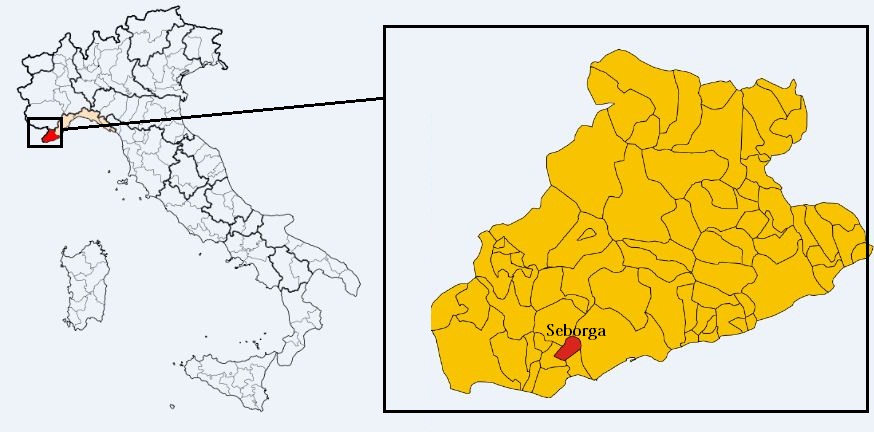
Principality of Seborga - Cistercian-Templar state or hoax?

Seborga was an ancient feud of the Counts of Ventimiglia. In 954 Count Guido bestowed the castle, the Saint Michael's Church in Ventimigila and the big portion of land to the monks of Lerins.  

In 1079 Seborga became a Principality of the Holy Roman Empire. It also boasts a Templar and Cistercian origin. Fact or hoax?

Medieval stories in a Portugese railway station

In the entrance hall of the Sao Bento station in Porto, northern Portugal, is a display in painted tiles of key scenes in medieval history from that country. Events to which early Portuguese Templars may have contributed.