
The Origin of the Templars according to Jacques de Vitry ca 1220

Horses in the Temple

Location of the first Templar fortress revealed
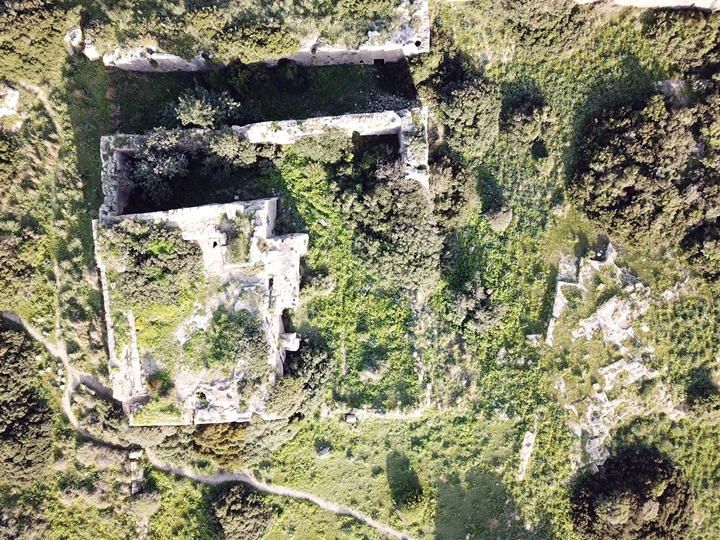
In the Middle Ages the important coastal road from Acre and Haifa to Jerusalem ran through a narrow, probably man made passage in the sandstone ridge that runs parallel to the coast line directly to the east of Atlit peninsula. In primary sources this passage is called amongst others Petra Incisa ("carved rock") or Districtum/Destrictum, Destroit or Détroit ("strait") . The setting made the site an ideal location for robbers to ambush pilgrims and other travelers. As even King Baldwin I of Jerusalem discovered in 1103, when he was wounded by robbers in the area. What is the history of this remarkable place and what have the Templars to do with it?
Hugues 1er de Champagne, from Count to Templar knight

On 1
January 1093, Hugues inherited from his other brother Eudes (Odo) IV the Counties of
Troyes, Vitry-le-François and Bar-sur-Aube. Only to abdicate in 1125 to become a Templar knight in the Holy Land.
How did his lifes develop from being a rich and important French nobleman to becoming a poor Templar?
A new Jerusalem in medieval Scandinavia

The Chinon Parchment of 1308 - Templars absolved

The relationship between Hugues de Payns and Bernard de Clairvaux

Ships and navigation during the Middle Ages

On the one hand, we can observe the technical excellence of the Scandinavians, who brought to ship design a real empirical talent for hydrodynamics and a more solid clinker construction. On the other hand, in the Mediterranean, the work of the Byzantines, who took care of the large galley fleets and took this type of ship into the Renaissance.
The Origin of the Templars according to Michael the Syrian ca 1180

Subscribe to:
Posts (Atom)