Carta caritatis: the Cistercian constitution - blue print of the Templar rule


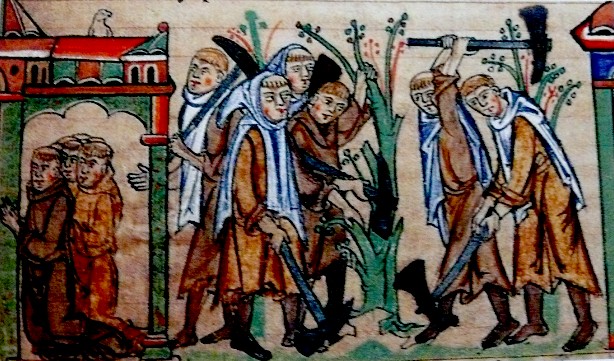
"Carta Caritatis’ (also known as the Charter of Charity) is a Cistercian source that is considered ‘the fundamental constitution of the Cistercian Order.’49 There is much debate amongst historians as to when the charter was actually written.

Many historians, including W. A. Parker Mason, believe the charter was completed by 1117, however, the modern historian, Lekai, argues that such a document would have taken decades longer. The work is generally attributed to Stephen Harding, the third abbot of the Cistercian Order, though modern historians agree that he was probably the author of only a primitive version of the source, and that the ‘Carta Caritatis’ was expanded by later generations, as and when it was appropriate....

At face value, the ‘Carta Caritatis’ is startlingly reminiscent of the Rule of Saint Benedict in its structure. However, while the Rule is a guide to how monks live their lives in the monastery, the charter reads much more like a legal document, not a guide, but an order. Thecharter is considered the Cistercian constitution due to its regulations for an intricate network of Cistercian houses. The formation of a constitution illustrates how quickly and rapidly the Cistercian Order had grown, no matter what part of the twelfth century it was written. The complex organisation and the mention of daughter-houses having daughterhouses of their own is testament to this."

This blog quotes freely from the thesis by Lori Firth, Hull University (2012):  "A Comparison of the Cistercian and Knights Templar Orders, And the Personal Influence of Bernard of Clairvaux", to be found here. Illustration By Jörg Breu the Elder - The Yorck Project (2002) 10.000 Meisterwerke der Malerei (DVD-ROM), distributed by DIRECTMEDIA Publishing GmbH. ISBN: 3936122202., Public Domain, Link

Support TemplarsNow™ by becoming a Patron, tipping us or buying one of our Reliable Books

Religious fanaticism in the 12th Century Muslim camp

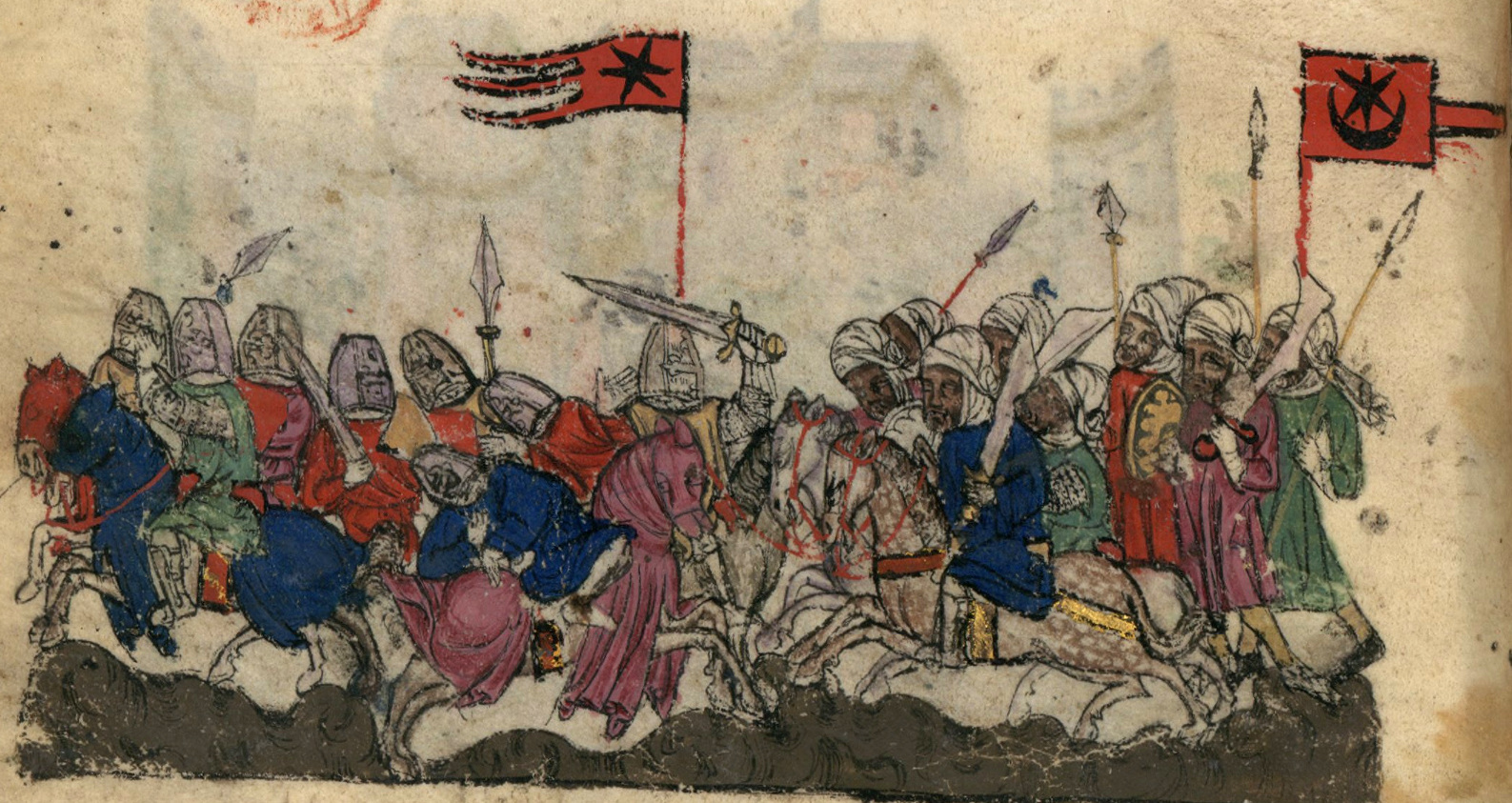
"The fiery zeal and warlike enthusiasm of the Templars were equalled, if not surpassed, by the stern fanaticism and religious ardour of the followers of Mahomet. “Noureddin fought,” says his oriental biographer, “like the meanest of his soldiers, saying, ‘Alas! it is now a long time that I have been seeking martyrdom without being able to obtain it.’ 

Religious fanaticism in the 12th Century Knights Templar camp

"The Templars style themselves “The Avengers of Jesus Christ,” and the “instruments and ministers of God for the punishment of infidels,” and the Pope and the holy fathers of the church proclaim that it is specially entrusted to them “to blot out from the earth all unbelievers,” and they hold out the joys of paradise as the glorious reward for the dangers and difficulties of the task.

Origin of the Cistercian Order: isolation and poverty

"The self-induced exclusion from the world discussed in the ‘Exordium Parvum’ is perhaps the first instance we see of the ideal of poverty, which became a part of the (Cistercian) Order’s mantra.

Knights Templar and Papal bulls: Milites Templi (1144)

"The second of the papal bulls, ‘Milites templi’ was issued in 1144 by Pope Celestine II. The bull discusses briefly the military aspects of the order; ‘through them that God has freed the eastern church from the filth of the pagans and defeated the enemies of the Christian faith.’ This shows the complete sanction for the military aspects of the order, even the taking of human life, if it means fighting for the Christian realm.

The exemplary military conduct of the Knights Templar documented

"Brother Everard des Barres, the newly-elected Master of the Temple, having collected together all the brethren from the western provinces, in 1147 joined the standard of Louis, the French king, and accompanied the crusaders to Palestine.

The Templar Rule and the Cistercian influence


"The Latin Rule, also known as the Primitive Rule, is one of the earliest sources of the Knights Templar. The Primitive Rule is a result of the discussions that took place at the Council of Troyes, which was under the heavy guidance of Bernard of Clairvaux, the new rising star of the Church. (...) The Council of Troyes took place in January 1129. The original Latin Rule, from the Council of Troyes, was actually written by the council’s scribe, John Michael, though the credit for its contents go to St Bernard; ‘At the very least he must have been a major influence on the framing of the Latin Rule, for it is clear that the later Templars valued their Cistercian links above all’.

The early Cistercians: back to strict observance of the Rule of St Benedict

"The ‘Exordium Parvum’ is a 12th century Cistercian document that includes the early history of Cîteaux, incorporating official letters and documents with narrative. While this source illustrates to us that the monks left Molesme to pursue a more rigorous devotion to the Rule of St Benedict, yet there is contrary evidence within the ‘Exordium Cistercii’ that tells us that the monks left for a new way of life because Molesme placed too much emphasis on materialistic wealth and possessions.

Gregorian reform at the root of Cistercian monasticism

"The Gregorian Reforms (initiated by Pope Gregory VII and the circle he formed in the papal curia, c. 1050–80, dealt with the moral integrity and independence of the clergy, TN). This reform inspired others to seek a monastic life far from the secular world and all its excesses and greed, to a life based around control of desire, and the strict discipline of the rules of the desert fathers.

Many new orders were formed, namely Benedictine and Augustinian. Of these new orders, it was the Cluniacs that dominated in the monastic aspect of the Church (which in the medieval period was much more significant). The Cluniacs sought to follow the Rule of St Benedict, taking vows of obedience and poverty. The importance of the Cluniacs in this innovative period cannot be understated; ‘At the end of the eleventh century, at the height of its magnificence, Cluny was the head of a huge monastic empire containing many hundreds of dependencies and associated houses spread throughout western Europe....

The Cistercian Order finds its origins in the Cluniac monastery. It was from the abbey of Molesme, that Robert of Molesme with other monks, including Stephen Harding, left in search of a monastic life of stricter poverty than had been seen hitherto by the Cluniacs....The Cistercian, though he lived a communal life, had his salvation very much in his own hands than his Cluniac cousin: he was expected to do more to eradicate his own sins than to pray for the forgiveness of others. This illustrates some other differences between the two reformist orders.

The early Cistercians sought an isolated place, rejecting the world, to pursue this vocation.... The history of the Cistercian Order is integral to the history of western monasticism....Indeed, the history of the Cistercian Order is so intertwined with the history of medieval Europe as a whole, that it is hard to identify which influenced the other more."

This blog quotes freely from the thesis by Lori Firth, Hull University (2012):  "A Comparison of the Cistercian and Knights Templar Orders, And the Personal Influence of Bernard of Clairvaux", to be found here. References in this source. Illustration shows Pope Gregory VII source

Support TemplarsNow™ by becoming a Patron, tipping us or buying one of our Reliable Books
Knights Templar and Papal bulls: Omne datum optimum (1139)

"To confirm the Order’s legitimacy in the Roman Catholic Church, three papal bulls (Omne datum optimum, Milites Templi and Militea Dei) were issued between 1139 and 1145.

The origin of the Cistercian Order by its own account: Exordium Parvum

"
Exordium Parvum’ is a source written by the Cistercians themselves and appears to be a simple and reliable retelling of the formation of the order, thought to have been written before 1119. W. A. Parker Mason says; ‘the account is so bald and straightforward that it is transparently truthful, its very conciseness being in its favour, while the documents also must be accepted as genuine’. The purpose of this source not only seems to be a basic history of the foundation of the order, but also as a document that legitimises the origins of the Cistercian order.

The Order of the Holy Sepulchre of Jerusalem - contemporary to the Knights Templar

"The Order of the Holy Sepulchre of Jerusalem owes its origins to Godfrey de Bouillon of the first Crusade, who gathered around him a group of Knights who were entrusted with the protection of the religious Chapter of Canons at the Holy Sepulchre of Christ in 1100. Godfrey had been elected leader of the victorious Crusaders, but refused the title of King. Instead he took on the title "Advocatus Sancti Sepulchri" - "Defender of the Holy Sepulchre".