
Profound changes occurred when lay knights became members of the religious-military order of the Knights Templar. What were the key aspects of these internal and external transformations?
Profound changes occurred when lay knights became members of the religious-military order of the Knights Templar. What were the key aspects of these internal and external transformations?


The original Latin Rule, from the Council of Troyes, was actually written by the council’s scribe, John Michael, though the credit for its contents goes to Bernard; ‘At the very least he must have been a major influence on the framing of the Latin Rule, for it is clear that the later Templars valued their Cistercian links above all’.
The structure of the text is strikingly similar to that of ‘Carta Caritatis’, the Cistercian Rule dating from 1119, and the Rule of St Benedict (ca 500 CE), which implies a replication of Cistercian organisation and values. What is very interesting to note is that it was at the Council of Troyes that the Knights Templar came to follow the Rule of St Benedict. Until the time of the 1129 Council, the Templars had been following the Rule of St. Augustine, common in the Orient.
The 1129 Rule itself describes procedures that the Templar brothers should adhere to on a day-to-day basis. The description of procedures -in particular clause three, which relate to clothing- resonates the tone of both the Cistercian ‘Charter of Charity’ and also the Rule of St Benedict. In fact much of the Rule appears to have strong monastic overtones, rather than a military aspect and the detail that is given to food and drink is very similar to that of the Cistercians.
The Templar Rule did not see its completion in 1129, but rather its launch.
After 1129 the Rule as it is known today evolved over almost 150 years. During
this timespan the Rule expanded from the original 76 clauses to a complex of independant sections, totalling 686 clauses. This expansion is dealt with in another blog.
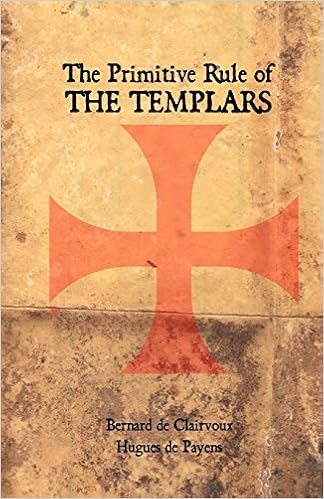
Buy your own Rule here. For the original Latin Rule in French visit templiers.org.free.fr
This blog is in part based on the thesis by Lori Firth, Hull University (2012): "A Comparison of the Cistercian and Knights Templar Orders, And the Personal Influence of Bernard of Clairvaux", to be found here
The Primitive Rule in English is quoted below in its entirety. Source: www.templiers.org

The Primitive Rule of the Temple originated as result of the Troyes Council of January, 1129. During that council Hughes de Payens, the major founding member of the group of knights that from about 1119 lived in the former Al-Aqsa mosque on Table Montain, related an account of this group's foundation and history. What is known on the origin of the Rule and its development?
The Latin Rule, also known as the Primitive Rule, was the result of the discussions that took place at the Council of Troyes, which was under the heavy guidance of Bernard of Clairvaux, the new rising star of the Church. This Council took place in January 1129.
The original Latin Rule, from the Council of Troyes, was actually written by the council’s scribe, John Michael, though the credit for its contents goes to St Bernard; ‘At the very least he must have been a major influence on the framing of the Latin Rule, for it is clear that the later Templars valued their Cistercian links above all’.
The structure of the text is strikingly similar to that of ‘Carta Caritatis’ and the Rule of St Benedict, which implies a replication of Cistercian organisation and values. What is very interesting to note is that it was at the Council of Troyes that the Knights Templar came to follow the Rule of St Benedict; ‘At the time of the Council, the Templars had been following the Rule of St. Augustine, however, this changed in 1129 with the direct influence of the Cistercian abbot Bernard of Clairvaux.’
The Rule itself describes procedures that the Templar brothers should adhere to on a day-to-day basis. The description of procedures -in particular clause three, which relate to clothing- resonates the tone of both the Cistercian ‘Charter of Charity’ and also the Rule of St Benedict. In fact much of the Rule appears to have strong monastic overtones, rather than a military aspect and the detail that is given to food and drink is very similar to that of the Cistercians.
Buy your own Rule here. For the original Latin Rule in French visit templiers.org.free.fr
This blog is in part based on the thesis by Lori Firth, Hull University (2012): "A Comparison of the Cistercian and Knights Templar Orders, And the Personal Influence of Bernard of Clairvaux", to be found here
The Primitive Rule in English is quoted below in its entirety. Source: www.templiers.org
Support TemplarsNow™ by becoming a Patron, tipping us or buying one of our Reliable Books
or other products at Amazon or Bol via our affiliate links amazon.com and bol.com
  |
