

Walter Map (Latin: Gualterius Mappus; French: Gautier Map; 1140 – c. 1210) was an English medieval courtier and writer. Map claimed that he was a man of the Welsh Marches. He was probably born in Herefordshire. Map was a courtier of King Henry II of England, working as clerck in the royal household, and as itinerant justice and justice in Eyre. The King also sent him on missions to Louis VII of France and to Pope Alexander III. Map's studies and employment took him to several church services: canon and precentor of Lincoln, parson of Westbury-upon- Severn in Gloucestershire, prebendary of Mapesbury in the Willesden neighbourhood of London, and in later life (1197) Archdeacon of Oxford.

Unlike what is generally thought, there was no Cistercian Order as a united entity for much of the twelfth Century. (...) Such a Cistercian Order was only invented in the third quarter of the twelfth century. That Order as we usually think of it, an administrative institution that united more than five hundred abbeys by 1215 (when its organization was held up by the Fourth Lateran Council as a model to be emulated), did not appear in 1119 or 1113 or 1098, the dates usually asserted, but much later.
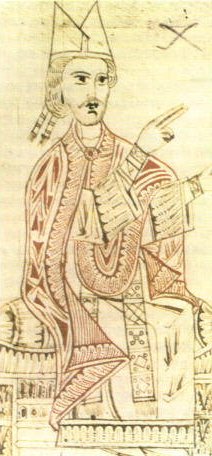
The 1095 speech by Pope Urban II delivered at Clermont Ferrand is well known. This speech aimed at arrousing the people to start a armed pilgrimage to deliver the Holy Land from the hands of the "pagans", that later became known as the First Crusade. Less well known is the speech with a similar purpose delivered in 1074, so about 20 years earlier, by Pope Gregory VII. In this speech the Pope suggested a military expedition to assist the Byzantine empire against the Seljuk Turks, following the defeat of the Byzantine army under Emperor Romanos IV Diogene by the Seljuk Turks at Manzikert in 1071. The very first call to crusade?


source YouTube
Support TemplarsNow™ by becoming a Patron, tipping us or buying one of our Reliable Books

