March 18, 2014 - 700th Commemoration death of Jaques de Molay

On March 18, 2014 we commemorated the 700th anniversary of the death of the last official Grand Master of the Knights Templar, Jacques de Molay. De Molay, born in 1244 was put to death in Paris by the King of France on 18 March 1314. He was the 23rd and last Grand Master of the Knights Templar, leading the Order from 20 April 1292 until it was dissolved by order of Pope Clement V in 1307.

Though little is known of his actual life and deeds except for his last years as Grand Master, he is the best known Templar, along with the Order's founder and first Grand Master, Hugues de Payens(1070–1136). Jacques de Molay's goal as Grand Master was to reform the Order, and adjust it to the situation in the Holy Land during the waning days of the Crusades.

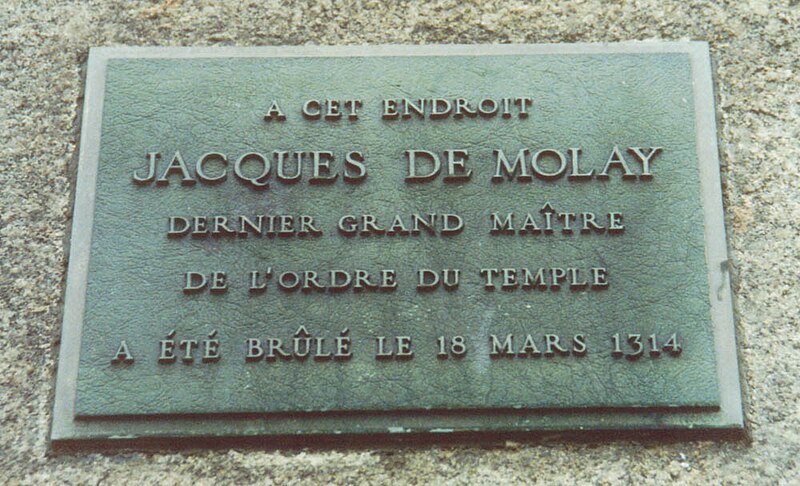
As European support for the Crusades had dwindled, other forces were at work which sought to disband the Order and claim the wealth of the Templars as their own. King Philip IV of France, deeply in debt to the Templars, had De Molay and many other French Templars arrested in 1307 and tortured into making false confessions. When de Molay later retracted his confession, Philip had him executed by burning upon a scaffold on the Paris Ile des Juifs in the River Seine on 18 March 1314.

Death-site plaque of Jaques de Molay on Isle des Juifs, Paris
source text and illustrations wikipedia.org

Birth of the Knights Templar - a summary

After the Crusader conquest of Jerusalem on June 15, 1099  "pilgrims were never safe once they were outside the walls of Jerusalem, as attacks by bands of Saracen robbers were frequent. Even as early as 1106, there were reports of trouble.A Russian abbot by the name of Daniel wrote of his visit to the tomb of St George at Lydda that year: ‘And there are many springs here; travellers rest by the water but with great fear,for it is a deserted place and nearby is the town of Ascalon from which Saracens sally forth and kill travellers on these roads.There is a great fear too, going up from that place into the hills.’ (...)

Aristocratic and monastic primacy in the 12th century County of Champagne, France

In The Aristocracy in the County of Champagne, 1100-1300, Theodore Evergates sketches the administrative situation in the County of Champagne, France in the 12th century. Champagne is the birth place of the Cistercian monastic Order, and also played an important part in founding of the Knights Templar. A summary.

The Templar's First Task - Highway Police in Peace Time

After the conquest of Jerusalem in 1099 the Kingdom of the Franks did not endure a perpetual state of emergency, as the chroniclers and many historians wanted us to believe. What was in those relatively quiet days the role of the Knights Templar?

Evrard des Barres - Templar Grand Master and Cistercian monk

Evrard des Barres (ca 1113 - November 1174) was the third Grand Master of Knights Templar, serving from 1147 until 1151. After his career at the Temple he retired to Clairvaux near the end of the life of  abbot Bernard (died 1153). This again is an illustration of the close relationships that existed between the Knights Templar and the Cistercian Order. What are the details of Evrard's life?

Templars in Sweden?

People who read Jan Guillou's books on Arn Magnusson, the imaginary Swedish Knight Templar, often ask if there really have been Knights Templar as far up north as Sweden. It has of course been speculated that the noble man who appears in the relief on Forshems church, and who inspired Guillou, must have been a Knight Templar. Is there reason to believe this?

The Templars and Nostradamus - myth or truth?

In his book  Nostradamus and the Lost Templar Legacy (2003) Rudy Cambier presents the results of his decade long research and analysis of the verses of Nostradamus' 'prophecies'. He argues that the language of those verses does not belong in the 16th Century, nor in Nostradamus' region of Provence, France. An intriguing alternative vision unfolds.

Cluny Abbey - the islamic link to Christian France

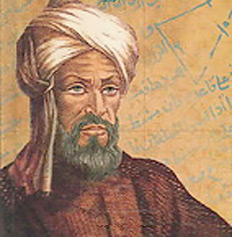
Islamic knowledge contributions to Medieval Europe were numerous, affecting such varied areas as art, architecture, medicine, agriculture, music, language, and technology. From the 11th to 13th centuries, Europe absorbed knowledge from the Islamic civilization. The Benedictin monastery at Cluny played an important part.

Bernard de Clairvaux - 900 years at Citeaux

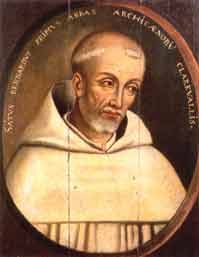
The ninth centenary of Bernard de Fontaine’s entry into the Abbey of Cîteaux (1112 or 1113?) was celebrated during the Vocations Year 2012-2013. After founding Clairvaux Abbey in 1115 Bernard became better known as Bernard de Clairvaux, the spiritual leader of the Cistercian Order and (after 1127) of the Order of the Knights Templar.

On this occasion Dom Olivier, abbot of present day Cîteaux Abbey, has asked to pass on the following invitation to all the members of the Order of Cistercians of the Strict Observance O.C.S.O.. This request is relayed here in full.
"Our community is going to celebrate the ninth centenary of St Bernard’s entering of Cîteaux (1112 or 1113?). To mark the event, we are setting up a campaign of prayer for vocations, from 20th August 2012 to 20th August 2013. We invite you to join us with this prayer:

PRAYER FOR VOCATIONS

Most gracious Father,
in setting up the New Monaster your fathers followed the poor Christ into the desert.
Thus they lived the Gospel
by rediscovering the Rule of Saint Benedict in its purity.

You gave Bernard of Fontaine
the ability to make this new life attractive and appealing to others,
in the joy of the Holy Spirit.

Grant that we today, after their example,
may live our charism deeply
in a spirit of peace, unity, humility,
and above all, in the charity which surpasses all other gifts.
May men and women of our time
be newly called to follow the Gospel in monastic life,
in the service of the Church’s mission,
and in a world forgetful of You.

Remember Lord, Cîteaux,
where Bernard arrived with his companions.
May the brothers there
continue to live in the enthusiastic and generative spirit of the founders.

Remember all who live the Cistercian charism.

Remember all Cistercian communities,
those which are aging and those newly-born,
in all parts of the world, north and south, east and west.

Let them not lose courage in times of trial,
but turn to her whom Bernard called the Star of the Sea.

Holy Father,
from whom we have already received so much,
grant us again your blessing
that our communities may grow in numbers,
but above all in grace and in wisdom,
to your glory,
who are blessed for ever and ever.
Amen." 

sources text and illustration

Support TemplarsNow™ by becoming a Patron, tipping us or buying one of our Reliable Books