The Foundation of the Order of Knights Templar according to William of Tyre
William of Tyre, in his Historia rerum in partibus transmarinis gestarum, gives a detailed account of the foundation of the Order of the Knights Templar. It goes as follows.
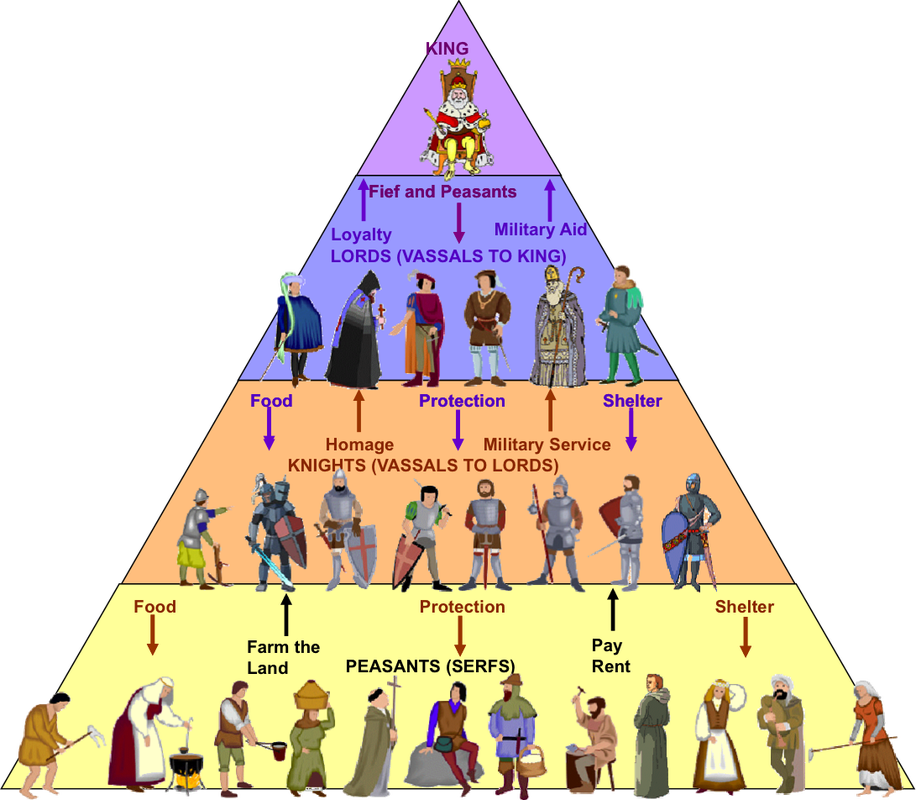
The socio-economic system of the 10th to 12th century
For a better understanding of the origin of the Medieval military Orders in general and the Knights templar in particular, it is necessary to understand the socio-economic system in the 9th to 12th century. What was it like?
Croatian President Josipović Receives Delegation of the Templar Order
The President of the Republic of Croatia, Ivo Josipović, received a delegation of dignitaries of the templar order O.S.M.T.H. who are participating in an international meeting of the Grand Magistral Council of the Order in Zagreb.
The Meeting assembled high-ranking representatives of the Order from over 20 countries of the world. Representatives of the Order informed the President of the Order’s rich history and operations in the world today. They made known to him endeavours and efforts for international peace, the Order’s humanitarian activities, as well as the promotion of intercultural and interreligious links and human rights. The Grand Master of the Order, General Patrick Rea, highlighted Croatia’s contribution in disseminating understanding and cooperation among peoples, which is one of the primary goals of the Order. President Josipović stressed the importance of building peace and bridges among peoples and cultures, and wished them success in their further work.
source text http://predsjednik.hr
March 18, 2014 - 700th Commemoration death of Jaques de Molay
On March 18, 2014 we commemorated the 700th anniversary of the death of the last official Grand Master of the Knights Templar, Jacques de Molay. De Molay, born in 1244 was put to death in Paris by the King of France on 18 March 1314. He was the 23rd and last Grand Master of the Knights Templar, leading the Order from 20 April 1292 until it was dissolved by order of Pope Clement V in 1307.
Though little is known of his actual life and deeds except for his last years as Grand Master, he is the best known Templar, along with the Order's founder and first Grand Master, Hugues de Payens(1070–1136). Jacques de Molay's goal as Grand Master was to reform the Order, and adjust it to the situation in the Holy Land during the waning days of the Crusades.
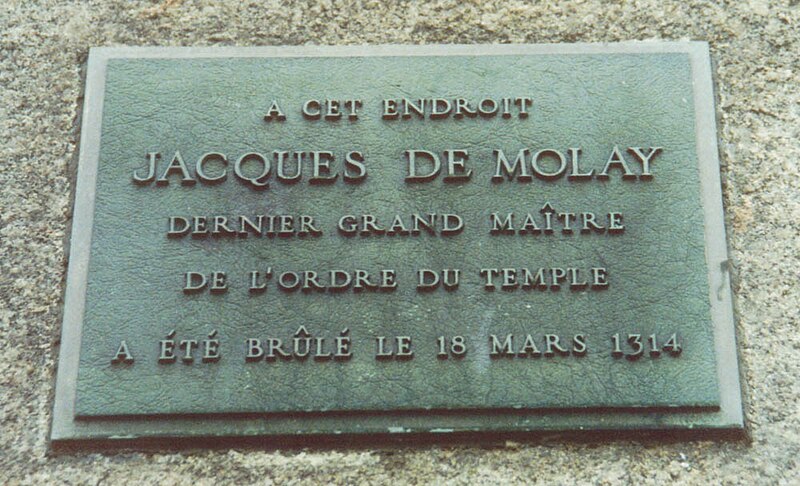
As European support for the Crusades had dwindled, other forces were at work which sought to disband the Order and claim the wealth of the Templars as their own. King Philip IV of France, deeply in debt to the Templars, had De Molay and many other French Templars arrested in 1307 and tortured into making false confessions. When de Molay later retracted his confession, Philip had him executed by burning upon a scaffold on the Paris Ile des Juifs in the River Seine on 18 March 1314.
source text and illustrations wikipedia.org
Though little is known of his actual life and deeds except for his last years as Grand Master, he is the best known Templar, along with the Order's founder and first Grand Master, Hugues de Payens(1070–1136). Jacques de Molay's goal as Grand Master was to reform the Order, and adjust it to the situation in the Holy Land during the waning days of the Crusades.
As European support for the Crusades had dwindled, other forces were at work which sought to disband the Order and claim the wealth of the Templars as their own. King Philip IV of France, deeply in debt to the Templars, had De Molay and many other French Templars arrested in 1307 and tortured into making false confessions. When de Molay later retracted his confession, Philip had him executed by burning upon a scaffold on the Paris Ile des Juifs in the River Seine on 18 March 1314.
| Death-site plaque of Jaques de Molay on Isle des Juifs, Paris |
Birth of the Knights Templar - a summary
After the Crusader conquest of Jerusalem on June 15, 1099 "pilgrims were never safe once they were outside the walls of Jerusalem, as attacks by bands of Saracen robbers were frequent. Even as early as 1106, there were reports of trouble.A Russian abbot by the name of Daniel wrote of his visit to the tomb of St George at Lydda that year: ‘And there are many springs here; travellers rest by the water but with great fear,for it is a deserted place and nearby is the town of Ascalon from which Saracens sally forth and kill travellers on these roads.There is a great fear too, going up from that place into the hills.’ (...)
Aristocratic and monastic primacy in the 12th century County of Champagne, France
In The Aristocracy in the County of Champagne, 1100-1300, Theodore Evergates sketches the administrative situation in the County of Champagne, France in the 12th century. Champagne is the birth place of the Cistercian monastic Order, and also played an important part in founding of the Knights Templar. A summary.
The Templar's First Task - Highway Police in Peace Time
After the conquest of Jerusalem in 1099 the Kingdom of the Franks did not endure a perpetual state of emergency, as the chroniclers and many historians wanted us to believe. What was in those relatively quiet days the role of the Knights Templar?
Evrard des Barres - Templar Grand Master and Cistercian monk
Evrard des Barres (ca 1113 - November 1174) was the third Grand Master of Knights Templar, serving from 1147 until 1151. After his career at the Temple he retired to Clairvaux near the end of the life of abbot Bernard (died 1153). This again is an illustration of the close relationships that existed between the Knights Templar and the Cistercian Order. What are the details of Evrard's life?
Templars in Sweden?
People who read Jan Guillou's books on Arn Magnusson, the imaginary Swedish Knight Templar, often ask if there really have been Knights Templar as far up north as Sweden. It has of course been speculated that the noble man who appears in the relief on Forshems church, and who inspired Guillou, must have been a Knight Templar. Is there reason to believe this?
Subscribe to:
Posts (Atom)