Setting the stage for the Middle Ages - role of the Church

"The rude and unlettered barbarian tribes who had eclipsed the rule of the Roman Empire were led by the Roman Church. The Church provided the glue by which these scattered tribes became a united force capable of protecting the Continent against the military expansion of Islam and the Oriental hordes.

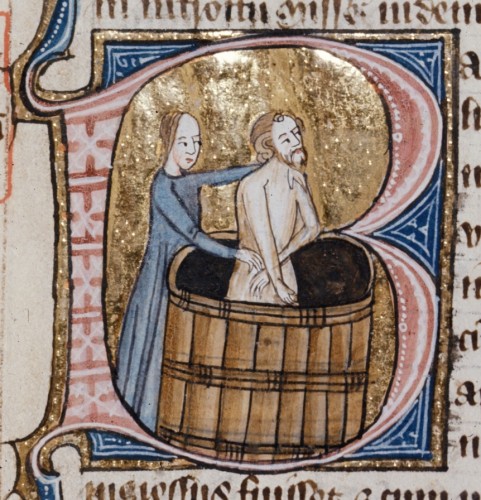
Setting the stage for the Middle Ages - daily life

"The sixth century marked the beginning of the Dark Ages in western Europe. While the Byzantine Empire generally prospered, despite its loss of territory, western Europe spent the six centuries after the death of Justinian in chaos, war, cultural degeneration, superstition, ignorance, and poverty. A harsh setting.
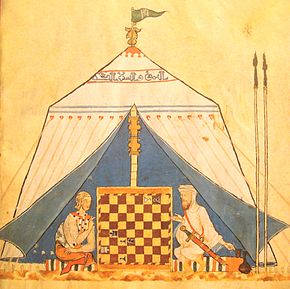
On Prophet Muhammad’s Covenants with Christians

In his paper "Religious Pluralism and Civic Rights in a “Muslim Nation”: An Analysis of Prophet Muhammad’s Covenants with Christians" Craig Considine

"examines the roles that religious pluralism and civic rights played in Prophet Muhammad’s vision of a “Muslim nation”.

He demonstrates how Muhammad desired a pluralistic society in which citizenship and equal rights were granted to all people regardless of religious beliefs and practices. The Covenants of the Prophet Muhammad with the Christians of his time are used as a framework for analysis. These documents have received little attention in our time, but their messages are crucial in light of current debates about Muslim-Christian relations.

The article campaigns for reviving the egalitarian spirit of the Covenants by refocusing our understanding of the ummah as a site for religious freedom and civil rights. Ultimately, Considine argues that the Covenants of Prophet Muhammad with the Christians of his time can be used to develop a stronger narrative of democratic partnership between Muslims and Christians in the “Islamic world” and beyond."

This blog contains the (slightly edited) entire Introduction to the following paper: Considine, C. Religious Pluralism and Civic Rights in a “Muslim Nation”: An Analysis of Prophet Muhammad’s Covenants with Christians. Religions 2016, 7, 1, which can be found at www.mdpi.com.  Illustration: A Christian and a Muslim playing chess, illustration from the Book of Games of Alfonso X (c. 1285; from wikipedia.org, Public Domain.

Support TemplarsNow™ by becoming a Patron, tipping us or buying one of our Reliable Books

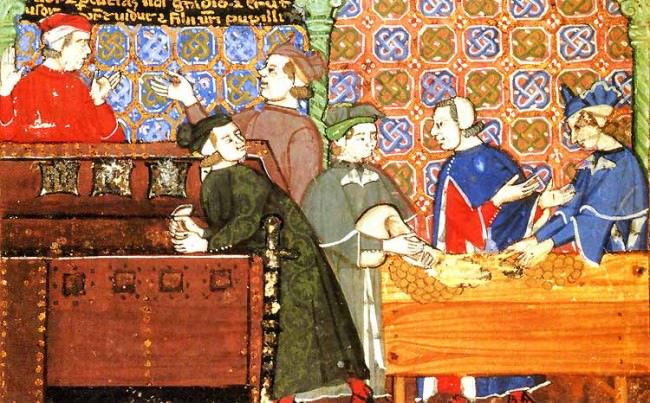
Financing the Crusades - Papal support

"The privileges of popes and princes for the crusaders reveal the great importance of credit arrangements in financing the crusades. 
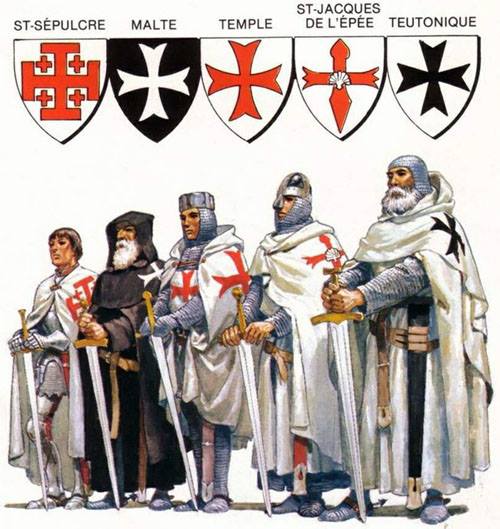
Financing the military orders in medieval times

"Ultimately the financial support of the military orders and the confraternities derived from the alms and legacies of the faithful. By his gift to one of the orders any Christian could share in the great enterprise and in the spiritual rewards promised to crusaders.

Financing the Crusades - the "lesser men" and their partnerships

The communal organization of the "lesser men", the middle classes, revealed itself in their crusades, which took now the character of a huge partnership, now that of a trading company, and now that of a state enterprise.

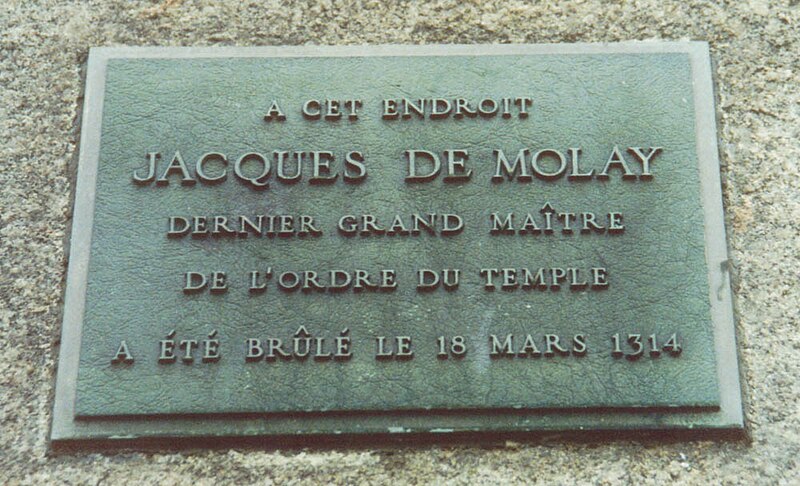
March 18, 2017, the 703rd anniversary death of Jacques de Molay

On March 18, 2017 we commemorated the 703rd anniversary of the death of the last official Grand Master of the Knights Templar, Jacques de Molay. De Molay, born in 1244 was put to death in Paris by the King of France on 18 March 1314. He was the 23rd and last Grand Master of the Knights Templar, leading the Order from 20 April 1292 until it was dissolved by order of Pope Clement V in 1307.

Though little is known of his actual life and deeds except for his last years as Grand Master, he is the best known Templar, along with the Order's founder and first Grand Master, Hugues de Payens (1070–1136). Jacques de Molay's goal as Grand Master was to reform the Order, and adjust it to the situation in the Holy Land during the waning days of the Crusades.

Death-site plaque of Jaques de Molay on Isle des Juifs, Paris
As European support for the Crusades had dwindled, other forces were at work which sought to disband the Order and claim the wealth of the Templars as their own. King Philip IV of France, deeply in debt to the Templars, had De Molay and many other French Templars arrested in 1307 and tortured into making false confessions. When de Molay later retracted his confession, Philip had him executed by burning upon a scaffold on the Paris Ile des Juifs in the River Seine on 18 March 1314.

source text and illustrations wikipedia.org


Support TemplarsNow™ by becoming a Patron, tipping us or buying one of our Reliable Books

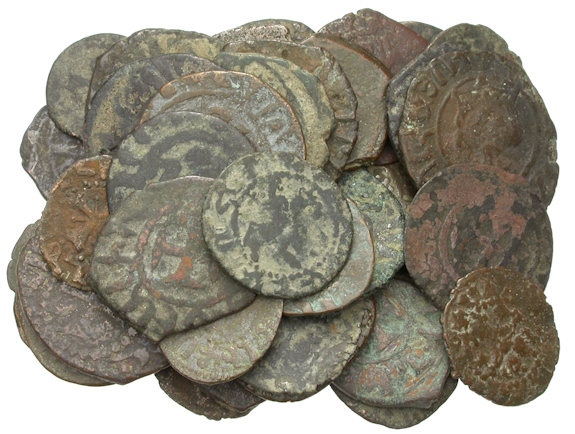
Financing the Crusades - mortgages, loans and gifts

"(It were) loans by which crusaders perhaps most commonly financed their journeys. They borrowed from kings and princes, from monasteries and bishops, from lay lords and merchants, from whoever had money to lend.