Pre-crusade Muslim religious tolerance to pilgrims in the Holy Land
Depicting Saracens in the Middle Ages: sometimes more than monsters
A six phase origin of the Order of the Temple
In his paper The first Templar Knight (part 2), the origin of the Temple, Josè Maria Fernandez Nùñez proposes a six phase development period of the premordial Order of the Temple, from 1104 to 1120.
"The first history of the Brotherhood is known as the time that occurs between the Synod of Nablus until the Council of Troyes, where the Order is definitely created, but...what about before? Before this period that covers from 1104 through 1120...what occurs during this period? ...
Some 16 years had transpired that would encompass the novitiate, the temporal acknowledgment; the creation of the Brotherhood or congregation in the aforementioned Synod. It can be stratified in six different periods.
Diversity and multiculturalism in the medieval world - theory and practise
"The concepts of diversity and multiculturalism seem, in many respects, to be associated with modernity. However, linguistic and religious diversity were facts of everyday life throughout the medieval world. And—very much like today—diversity had its share of proponents and its discontents.
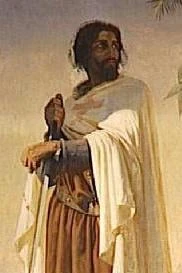
Racial changes in depicting Saracens in the Middle Ages
"How were Saracens depicted from 1200-1420, and what can this tell modern scholars about the way that western artists and audiences viewed and depicted Saracens?
The great work of Dr Bernadus Theodoor (Ben) Brus - 1917 - 2016
In 2017 I found out that Dr Brus passed away in 2016, only a year before his one hundredth birthday, which would have been Saterday, September 30th.
I had the honour to be in contact with Dr Brus for my own research several times. His work, summarized on his website and visually quoted on Templars Now, is the cornerstone of Templar research in The Netherlands and will remain so for many years to come. With great respect I acknowledge his work and vow to continue it as much as I can in my own way.
In 2019 I met with the family of Dr Brus. We agreed that TemplarsNow will continue the work of Dr Brus in a modest way. First step is by simply re-plublishing in English parts of his work on certain and probable sites on TemplarsNow channels. Later on TemplarsNow intends to undertake additional research on Templar sites in the Netherlands indicated by Dr Brus as probable and possible. All this will be done in honor of Dr Brus' monumental work.
Rest in Peace, Dr Ben Brus.
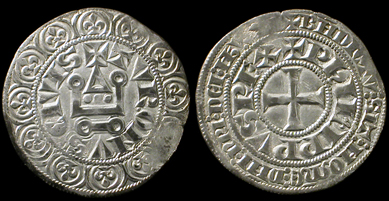
Financing the Crusades - general taxation
"A "first crude experiment" in compulsory almsgiving, the levy of 1166 begins the history of general taxation for financing the crusades.
People behind the Knights Templar
Usually the Knights Templar are referred to as if it was a a coherent body. This may have been the case in their later days. But in their early days, when the concept of knight-monks and the organisation were as such new, it seems more likely that they were a on-coherent group of individuals of different origins, mainly coming from early 12th century Francia.
Depictions of the Military Orders’ Martyrs in the Holy Land
"The military religious orders were founded to fight on behalf of their fellow Christians, in defence of pilgrims and Christian territory. They fought alongside and supported the crusaders in the Holy Land. (...) In an era in which warriors who died fighting non-Christians were increasingly depicted as martyrs, it is not surprising that writers of the 1120s and 1130s associated the first knight-brothers with martyrdom. But as the Franks of the Holy Land met with division and defeat, how far did this imagery continue? Did outsiders continue to depict the brothers of the military orders in this way?
The founding of a Cistercian abbey, a good investment
Financing the crusades - the role of the military orders
"Through the military orders of warrior-monks, the church provided directly for the defense of the Holy Land. The most important of these orders were the Knights of the Temple and the Brethren of the Hospital of St. John, although for a time the Teutonic Knights added their strength and resources to the common task.
How many Templars were there?
Is this a reasonable figure? (...) the estimated figure of 1,300 Templars in the East in the 1180s is too large. Perhaps there were only 300 brothers in total, in the whole of the East; that would mean that numbers more than halved between the 1180s and the early fourteenth century, but that would be reasonable after the losses of 1291-1302.
That is only the East: how many Templars were there overall? ... so far this suggests that there were no more than 1,500 Templars in Europe and Cyprus in 1307."
Text and illustration mainly from the blog by "Gawain's Mum" on gawainsmum.wordpress.com. Illustration shows Four Templar knights on the tomb of Don Felipe in the former Templar church of Santa Maria la Blanca de Villasirga, at Villacazar de irga (Palencia, Castile, Spain). Photo: Juan Fuguet Sans
Setting the stage for the Middle Ages - role of the Church
Setting the stage for the Middle Ages - daily life
"The sixth century marked the beginning of the Dark Ages in western Europe. While the Byzantine Empire generally prospered, despite its loss of territory, western Europe spent the six centuries after the death of Justinian in chaos, war, cultural degeneration, superstition, ignorance, and poverty. A harsh setting.
On Prophet Muhammad’s Covenants with Christians
"examines the roles that religious pluralism and civic rights played in Prophet Muhammad’s vision of a “Muslim nation”.
He demonstrates how Muhammad desired a pluralistic society in which citizenship and equal rights were granted to all people regardless of religious beliefs and practices. The Covenants of the Prophet Muhammad with the Christians of his time are used as a framework for analysis. These documents have received little attention in our time, but their messages are crucial in light of current debates about Muslim-Christian relations.
The article campaigns for reviving the egalitarian spirit of the Covenants by refocusing our understanding of the ummah as a site for religious freedom and civil rights. Ultimately, Considine argues that the Covenants of Prophet Muhammad with the Christians of his time can be used to develop a stronger narrative of democratic partnership between Muslims and Christians in the “Islamic world” and beyond."
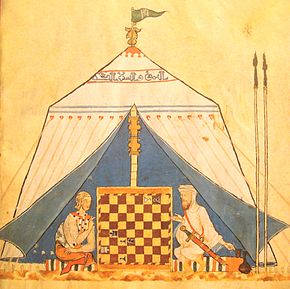
This blog contains the (slightly edited) entire Introduction to the following paper: Considine, C. Religious Pluralism and Civic Rights in a “Muslim Nation”: An Analysis of Prophet Muhammad’s Covenants with Christians. Religions 2016, 7, 1, which can be found at www.mdpi.com. Illustration: A Christian and a Muslim playing chess, illustration from the Book of Games of Alfonso X (c. 1285; from wikipedia.org, Public Domain.
Financing the Crusades - Papal support
"The privileges of popes and princes for the crusaders reveal the great importance of credit arrangements in financing the crusades.
Financing the military orders in medieval times
"Ultimately the financial support of the military orders and the confraternities derived from the alms and legacies of the faithful. By his gift to one of the orders any Christian could share in the great enterprise and in the spiritual rewards promised to crusaders.
Financing the Crusades - the "lesser men" and their partnerships
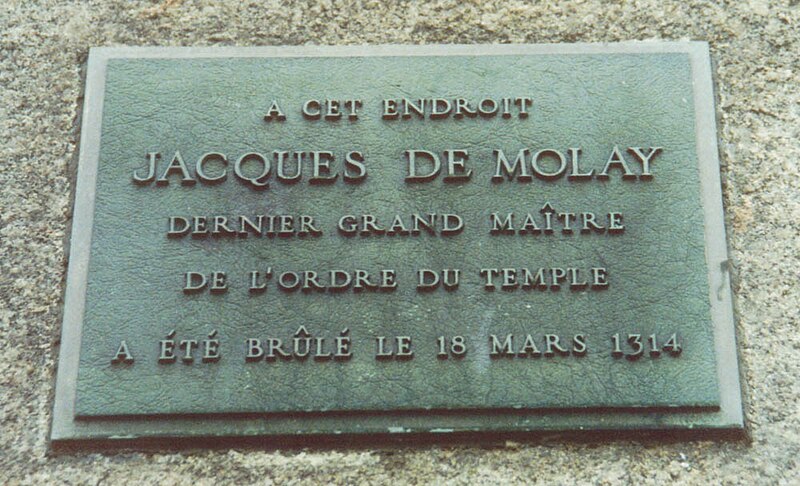
March 18, 2017, the 703rd anniversary death of Jacques de Molay
Though little is known of his actual life and deeds except for his last years as Grand Master, he is the best known Templar, along with the Order's founder and first Grand Master, Hugues de Payens (1070–1136). Jacques de Molay's goal as Grand Master was to reform the Order, and adjust it to the situation in the Holy Land during the waning days of the Crusades.
| Death-site plaque of Jaques de Molay on Isle des Juifs, Paris |
source text and illustrations wikipedia.org
Financing the Crusades - mortgages, loans and gifts
The life of Hugues Count of Champagne summarized
"The Order of the Temple included women"
"The Order of the Temple included women. Within the first years of its existence many women took the Order’s oath, although they remained members of the lay persons’ Temple.
,%20Bodleian%20Library,%20Oxford.png)


.jpg)