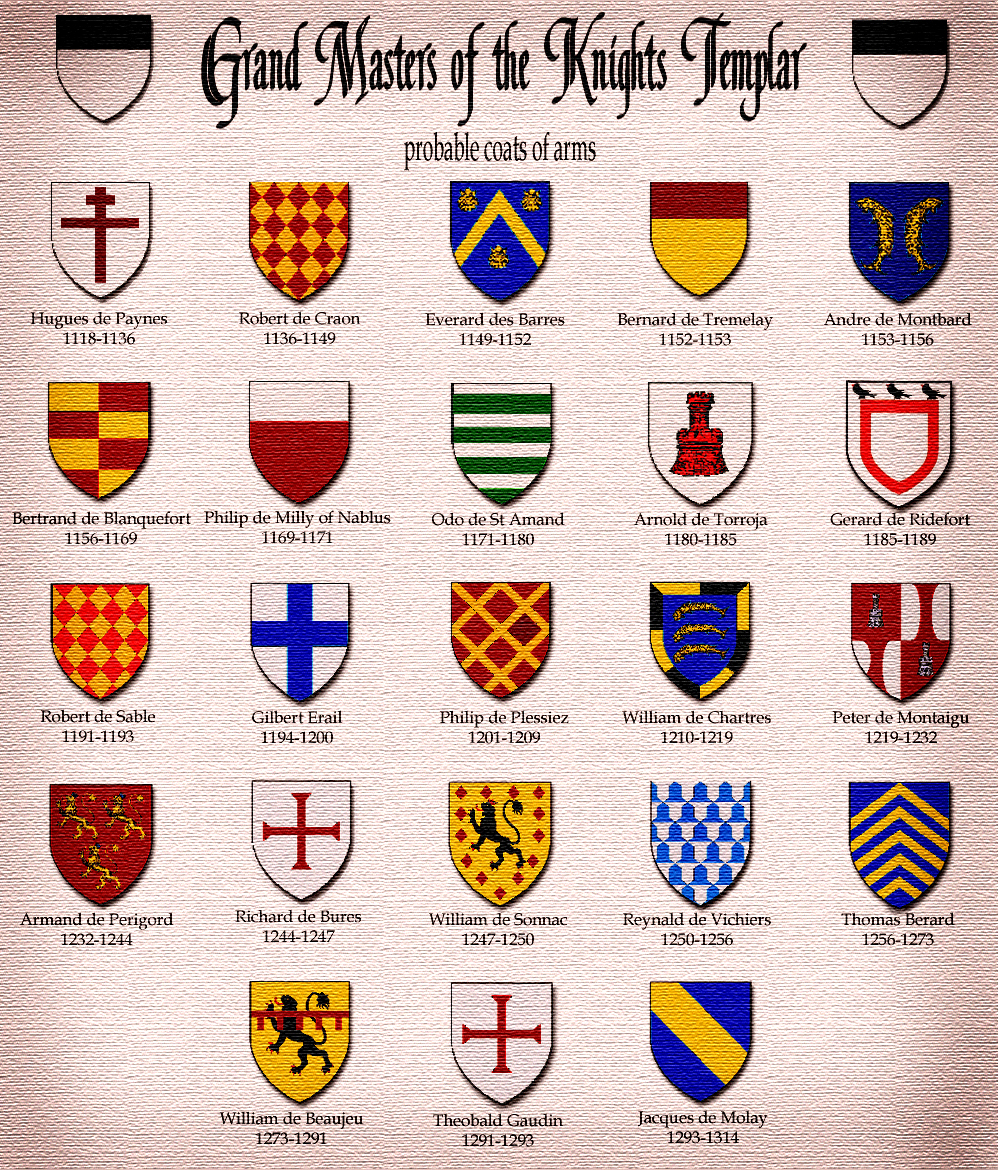
The Masters of the Temple - a review worth reading

On his website Gordon Napier published an elabroate and apparently well researched review of the Masters of the Knights Templar through the ages. This review was an adapted version of A to Z of the Knights Templar by the same author. This blog quotes in full the introduction to this review with some minor adaptations.

Virtual visit to a Cistercian monastery

As the research of TemplarsNow is progressing, proof of the direct relationship between the Cistercian monastic Order and the Order of the Knights Templar is mounting. It becomes clear that the origin and original aims of the Knights Templar cannot be understood without understanding the Cistercian movement at the time. The start of the Cistercian Order preceded that of the Knights Templar only a few decades, it stood at the same region in north-eastern France and held the same actors form local noble families, with a pivotal role for the court of the Earl of Champagne at Troyes. Therefore, information on the onset of the Cistercian order is regularly added to this site.

In an earlier contribution the basic plan of an 12th century Cistercian monastery was presented. This lay-out was applied in most abbeys. The present new contribution shows a YouTube 3D representation of the same. This allows for a virtual visit to an original Cistercian monastery.


"The Templar Revelation" reviewed by Theresa Welsh


Key quotes from the review by Theresa Welsh of  The Templar Revelation: Secret Guardians Of The True Identity Of Christ by Lynn Picknett and Clive Prince.

"In this ambitious and controversial work by Picknett and Prince we find much more on the legends of France concerning Mary Magdalene and her possible connection to Jesus and the Christian movement. The authors also delve into the mystery of Rennes le Chateau, the story which originally inspired Baigent, Lincoln and Leigh to do the investigation which led to their astounding theories. Since that time, other books have also questioned the standard story of Christian beginnings, and have even revived the idea that historical Jesus did not exist. The controversy surrounding the Dead Sea Scrolls has only added to the confusion about who the early Christians actually were and what they believed (...)

Controversy swirls around the fact that some of the material from the scrolls seems "Christian" but actually predates the Jesus movement. This, like the material in The Templar Revelation, seems to show that the central ideas of Christianity are not new. Other authors have shown that the "suffering savior" theme was present in many pagan religions of the era. Many of us have absorbed and accepted the idea that Christianity is not based on any new ideas. (...)
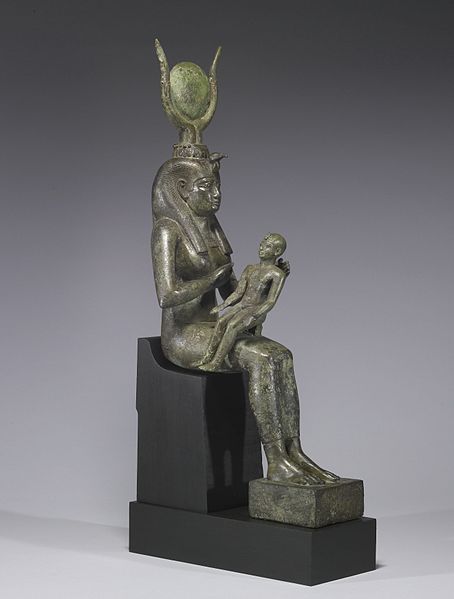
Picknett and Prince take the idea further and show that the roots of Christianity are in the Egyptian religion, especially the cult of Isis and Osiris. Osiris was killed on Friday and resurrected three days later by the power of his wife Isis, who then conceives their son, Horus. But even more parallels with Jesus can be found in the basic beliefs of the Isis religion, which emphasized repentance and confession. It was not Jesus who originally brought this message to the Jews, but another character who figures prominently in occult circles, John the Baptist. John is seen by the authors as a rival of Jesus who founded a substantial movement that continued to exist even though persecuted by Jews, Christians, and Moslems. John too took his ideas from Egypt, including immersion in water as a purification rite. (...)
 
While I find much of the material illuminating and believable, the authors ultimately fall short of pulling it all together in the magnificent way of Baigent, Lincoln and Leigh in The Holy Blood And The Holy Grail.
 
The Templar Revelation adds to the overall picture of the suppression of truth down through the ages, but it does not reveal any Great Truth. It's major contribution to this endless and wonderful debate is the Egyptian origins of Jesus' teachings. I previously assumed that Christianity began as a cult within Judaism, but these authors show that this may be a misperception, one fostered by the Church to hide its true, pagan origins. The original "holy family" was Osiris, Isis and Horus."

Read the whole review at www.theseekerbooks.com; illustration: Eqyptian madonna: Isis with Horus child (source wikipedia)  

Support TemplarsNow™ by becoming a Patron, tipping us or buying one of our Reliable Books 

Knights Templar and Freemasonry Today - Templar Degrees Explained

Colour diagram, Structure of Freemasonry, from 1916 with the Square and Compasses and the Masonic degrees, the Knights Templar at upper left
Templar degrees exist in Freemasonry today, and some Masonic bodies even carry the Templar name. Yet the medieval Order was long gone when the first of them appeared. Where do these degrees sit within Freemasonry, and what do they really claim?

The origin of the Templars according to William of Tyre ca 1180

William of Tyre (c. 1130 – 29 September 1186) was a medieval prelate and chronicler. As archbishop of Tyre, he is sometimes known as William II to distinguish him from a predecessor, William of Malines. He grew up in Jerusalem at the height of the Kingdom of Jerusalem, which had been established in 1099 after the First Crusade, and he spent twenty years studying the liberal arts and canon law in the universities of Europe. How did William describe the Templar origin?

Round churches on Bornholm Island, Denmark - Templar or not?

Located 40 kilometers southeast of the southern tip of Sweden but territorially part of Denmark, the island of Bornholm is one of the oldest visible rocks in the world. The island has been settled since at least 3600 BC when numerous dolmens and Neolithic mounds began to be constructed. From medieval time churches remain, which are linked to the Knights Templar. Is there hard evidence for a Templar origin?

Basic Layout of a medieval Cistercian Monastery

In reaction to the development of non-basic elements in Cluniac Benedictine monasteries, the Cistercians originally adopted a very simple and strickt lay-out for their monasteries. No unnecessary elements were allowed. What were the main aspects?

Spread of Cistercian monasteries 11th 12th century

In many posts proof of the direct relationship between the Cistercian monastic Order and the Order of the Knights Templar is documented. Therefore there may be a regional relationship also between the development of Cistercian and Templar sites. This blog focusses on the spread of Cistercian monasteries.

2013 OSMTH Commemoration Jacques de Molay and Investiture, Paris, France

OSMTH video of 2013 OSMTH commemoration of Jacques de Molay and Investiture, March 22-24, Paris, France. source